

Table of Contents
- What Heavy Equipment Training ROI Actually Means
- Calculating Training ROI for Construction Companies
- Heavy Equipment Simulator Training Effectiveness
- Reducing Equipment Downtime Through Operator Training
- Safety, Insurance, and Long-Term Retention Gains
- Real Case Studies: Training ROI in Action
- Building Your Business Case for Training Investment
- Conclusion
Last Updated: August 27, 2026
What Heavy Equipment Training ROI Actually Means
Heavy equipment training ROI is the measurable financial return generated when operators gain new skills and safety knowledge. But here's where most analyses fall short: they focus on direct cost recovery and miss the compounding gains that arrive months after training ends.

The real ROI isn't just about recouping the training investment. It's about what happens when your team operates more efficiently, completes projects faster, reduces accidents, and stays employed longer. According to Training Program ROI data, companies are 17% more productive and 21% more profitable when employees receive proper training. That productivity gap alone justifies the cost before you factor in anything else.
The global heavy equipment market is projected to reach $242 billion by 2026, driven by digitalization and electrification trends, and operator skill gaps are widening. Demand for skilled operators is climbing faster than supply. This creates a hard choice for contractors and equipment owners: invest in training now, or lose qualified operators to competitors who do.
Calculating Training ROI for Construction Companies
The formula looks straightforward. Take your total training investment, subtract it from quantifiable benefits, divide by the investment, and multiply by 100. But the real challenge is knowing what to measure.
Most companies underestimate their training costs and overestimate their benefits, which creates inflated ROI numbers that don't hold up under scrutiny. Others skip measurement entirely. According to research, only 48% of companies actually measure training ROI, meaning half your competitors are flying blind on whether their training investments work.
Total Training Costs to Include
Training costs extend far beyond tuition. If you're calculating ROI, include every expense:
- Program fees or curriculum purchase: Direct cost to access training materials or instructor packages
- Instructor time: Whether internal staff or external trainers, account for their hourly rate multiplied by training hours
- Operator downtime: Salary and benefits for the operator while they're in training, not on a job site generating revenue
- Equipment access: If using simulators or live equipment for hands-on training, factor in equipment rental or maintenance costs
- Administrative overhead: Time spent scheduling, tracking completion, managing records, and coordinating with field teams
- Travel and accommodation: For operators traveling to training locations, include transportation, meals, and lodging
A realistic cost per trainee often runs $3,000-$8,000 when you account for downtime alone. Many companies cite only the program fee ($500-$2,000) and wonder why their ROI looks weak after six months.
Quantifiable Benefits and Revenue Gains
The benefits side requires specificity. Vague improvements don't move the needle on ROI calculations. Focus on measurable outcomes:
- Fuel efficiency gains: A skilled operator uses 10-12% less fuel per day than an unskilled one, On a fleet of 10 excavators running 250 days per year at $150/day fuel cost, that's $450,000 in annual savings
- Reduced equipment downtime: Trained operators perform proper pre-operation inspections and avoid damage that triggers repairs. Downtime costs $2,000-$10,000 per day depending on equipment type
- Faster project completion: Productivity gains of 15-25% are common after training, compressing timelines and freeing equipment for additional jobs
- Accident reduction and insurance benefits: Fewer incidents mean lower insurance premiums, workers' compensation claims, and regulatory fines
- Operator retention: Employees who receive training stay 57% longer than those who don't, saving $8,053 per person annually in turnover costs
Calculate conservatively. If you're unsure whether a benefit will materialize, reduce it by 25-50% in your model. Conservative ROI that actually happens beats optimistic projections that disappoint.
Heavy Equipment Simulator Training Effectiveness
Simulation-based training ranks first in effectiveness, delivering 100% success rates in controlled studies. But "effectiveness" needs definition: simulators excel at building muscle memory and decision-making before operators touch live equipment, which reduces on-site errors and accelerates competency.
The Australian Army School of Military Engineering tested simulator training against real-world performance and found that operator performance in the simulator was consistent with their real-world performance on key measures. This validation matters because it proves simulators aren't just comfortable practice, they're predictive of actual job performance.
Simulator training compresses learning timelines dramatically. Conewago Enterprises reduced onsite crane training from 6 months to 7 weeks using simulation, cutting training costs from $40,000 to $15,000 per trainee. That's a 62% cost reduction while maintaining safety and competency standards. An excavator operator also reduced cycle time by over 37%, meaning faster work and higher output from day one.
The efficiency gain works because simulators allow repetition without equipment wear, fuel cost, or safety risk. An operator can practice 50 emergency stops in a simulator before attempting one on a live machine. That volume of deliberate practice builds confidence and muscle memory that transfers directly to the job site.
Iron Skills Academy's training materials integrate simulator-ready content with classroom fundamentals, so your team can blend both approaches. Simulators work best when paired with structured curriculum covering safety principles, equipment systems, and operational judgment, the knowledge that simulators can't teach alone.

Reducing Equipment Downtime Through Operator Training
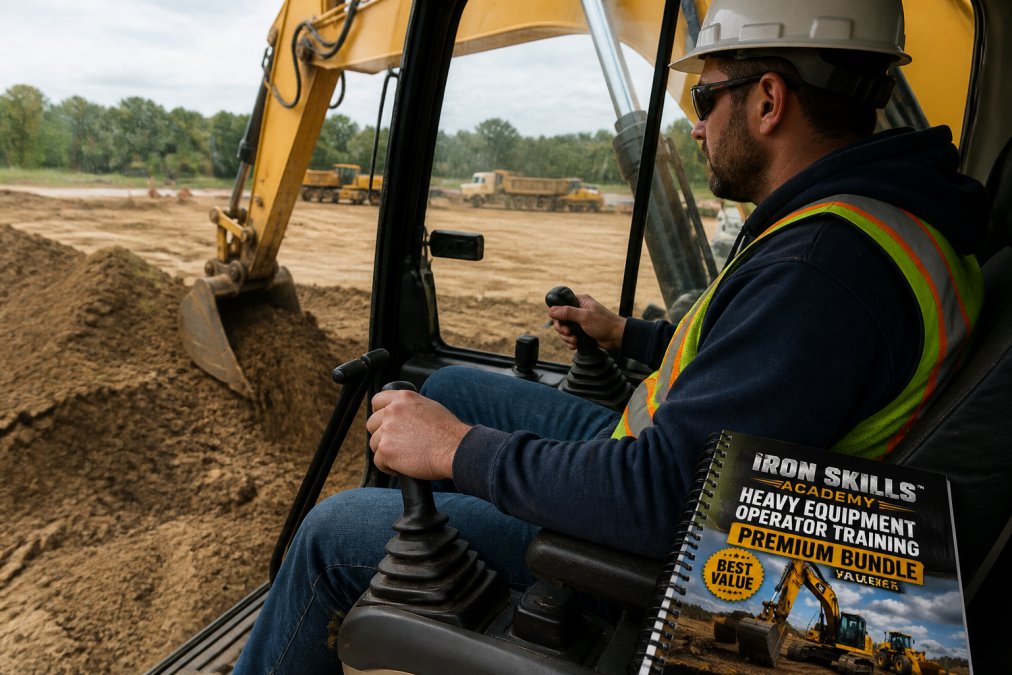
Equipment downtime is a silent profit killer. A single excavator sitting idle costs $2,000-$10,000 per day, depending on whether you're renting it or carrying depreciation. Multiply that across a fleet and downtime becomes a major drag on profitability.
Trained operators reduce downtime through two mechanisms: they avoid damage that triggers repairs, and they perform preventive maintenance that catches problems before they become failures.
Telematics data reveals the pattern clearly. One construction contractor identified three excavators idling for over 90 minutes per shift using equipment monitoring systems. The operators weren't aware of the inefficiency. After targeted training on fuel-efficient operation and cycle optimization, the same operators reduced idle time by 60%. The result: $18,000 in fuel savings within four months.
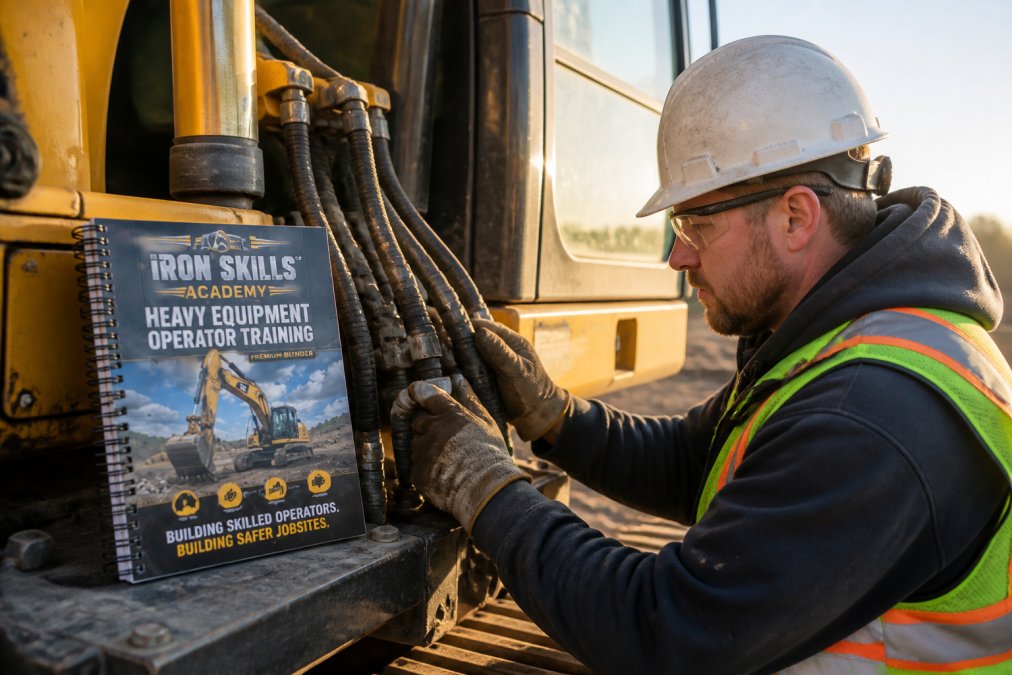
Pre-operation inspections are where trained operators shine. An untrained operator might start a machine without checking hydraulic fluid, filter condition, or boom alignment. A trained operator runs a systematic inspection checklist, spots wear before it becomes failure, and alerts maintenance to small problems before they cascade into major repairs.
Manufacturing firms report 25-40% productivity gains within 90 days of equipment operator training, and that improvement comes largely from reduced downtime and faster cycle times. On a $500K piece of equipment, a 30% productivity gain is worth $150K annually, far exceeding the training investment.
Safety, Insurance, and Long-Term Retention Gains
Safety training generates ROI through two channels: reduced accident rates and lower insurance costs. The first saves lives. The second saves money. Both matter.
Insurance Premium Reductions
Insurance companies reward safety culture with lower premiums. Contractors demonstrating strong training records qualify for reduced rates. According to 2026 construction training data, 60% of contractors report lower insurance premiums when they document comprehensive safety training programs.
Thompson Machinery, a Caterpillar dealership, invested $25,000 annually in web-based safety training. By year two, their worker's compensation insurance rates dropped by $200,000 annually, a 700% ROI based solely on insurance savings. That's before accounting for the safety benefits and reduced downtime.
The math is straightforward: fewer accidents mean fewer claims, which mean lower renewal premiums. An insurance broker can quantify your current premium and project savings based on your industry's average safety improvement rate. That projection becomes a concrete line item in your ROI model.
Skill Retention and Labor Turnover
Employee retention is where training delivers its longest-term payoff. Organizations with strong learning cultures experience 57% higher retention rates. That retention alone saves an estimated $8,053 per person annually through reduced recruiting, onboarding, and lost productivity.
Here's the retention mechanism: operators who receive structured training feel valued. They develop deeper expertise. They're more confident on the job. They stay longer. The operators you lose are the ones who feel stuck with no path forward.
Skill decay is the hidden cost nobody talks about. An operator trained two years ago but never refreshed loses sharpness. They revert to unsafe shortcuts. They operate less efficiently. Their judgment degrades. Structured training programs with periodic refreshers maintain competency and safety culture over time.
NCCER research found that structured training programs for craft professionals deliver up to a $3 return for every $1 invested, with 84% of respondents reporting improved retention. That multiplier compounds as your trained workforce stays longer and operates more safely.
Real Case Studies: Training ROI in Action
IUOE Local 150 implemented CM Labs simulators for heavy equipment training and increased training capacity by more than 100%. They could train twice as many operators in the same facility with the same instructor time. That capacity expansion meant faster certification timelines and reduced bottlenecks for members waiting to enter the field.
The financial impact: more operators certified annually, higher membership dues, and reduced wait times that were pushing members toward competing unions. The simulator investment paid for itself through increased throughput alone.
Conewago Enterprises reduced onsite crane training from 6 months to 7 weeks using simulation, cutting per-trainee costs from $40,000 to $15,000. They maintained safety standards and operator competency while compressing the timeline by 82%. The cost savings were immediate. The efficiency gains, operators reaching full productivity faster, compounded over their careers.
These case studies share a pattern: the companies that invested in structured training systematically outperformed those relying on informal on-the-job learning. The ROI wasn't marginal. It was substantial and measurable within the first year.
Building Your Business Case for Training Investment
A solid business case for training investment requires three components: cost clarity, benefit quantification, and timeline definition.
Start with cost. List every expense associated with training your operators. Include downtime, instructor fees, materials, travel, and administrative overhead. Be specific. Generic estimates like "training costs $2,000" will collapse under scrutiny.
Next, quantify benefits conservatively. Don't project 25% productivity gains if you've seen 15% in similar roles. Use industry benchmarks from the research data, but adjust for your specific context. If your operators are already fairly skilled, gains will be smaller than for a team starting from scratch.
Define your timeline. Most training ROI breaks even within 6-12 months. Insurance savings may take longer to materialize (insurance renews annually). Retention benefits compound over 24+ months. Show decision-makers the timeline so they understand when to expect each benefit category.
Create a summary table that shows the cost-benefit breakdown:
| Cost Category | Amount | Benefit Category | Amount | Timeline |
|---|---|---|---|---|
| Training program (5 operators) | $15,000 | Fuel efficiency savings | $22,500 | Months 1-12 |
| Operator downtime (250 hours) | $18,750 | Reduced downtime (fewer repairs) | $35,000 | Months 1-12 |
| Administrative overhead | $3,000 | Insurance premium reduction | $50,000 | Year 2 |
| Total Cost | $36,750 | Retention savings (1 retained operator) | $8,053/year | Years 1-3 |
| Subtotal Year 1 Benefits | $57,500 | |||
| ROI Year 1 | 56% |
This clarity transforms training from an expense into an investment with defined returns.
Conclusion
Heavy equipment training ROI isn't speculative. The data is clear: structured training delivers 17-21% productivity gains, reduces accidents, lowers insurance costs, and cuts operator turnover by 57%. The challenge isn't whether training works, it's measuring and communicating the results to justify the investment.
Iron Skills Academy's Heavy Equipment Operator Training Manual provides the structured curriculum your team needs to build a foundation in safety, inspections, operating fundamentals, and equipment-specific skills. Whether you're training new operators or refreshing an existing team, having curriculum aligned with industry standards accelerates competency and measurable ROI. Start Training with Iron Skills Academy and document the improvements in safety, productivity, and retention that drive real financial returns.
=== FAQ ANSWERS (audit these too, same rules) ===
[1] Q: How do you calculate the ROI of heavy equipment training programs? A: Start by identifying total training costs: instructor fees, materials, equipment access, and employee downtime during training. Next, quantify benefits over 12 months: productivity gains (output increase per operator), fuel savings from skilled operation, accident reduction, insurance premium drops, and retention savings. Divide total benefits by total costs, then multiply by 100 for percentage ROI. Research shows structured training delivers up to $3 in return for every $1 invested, with manufacturing firms reporting 25-40% productivity gains within 90 days.
[2] Q: What financial benefits come from heavy equipment simulator training effectiveness? A: Simulator-based training ranks first in effectiveness with 100% success rates and cuts training time dramatically. Conewago Enterprises reduced crane operator onsite training from 6 months to 7 weeks, cutting costs from $40,000 to $15,000 per trainee. Simulators allow operators to practice dangerous scenarios safely, reducing incident risk before they touch real equipment. The global simulator training market is projected to grow, reflecting strong belief in its ROI across the industry.
[3] Q: How much can operator training reduce fuel costs and equipment downtime? A: A skilled operator uses 10-12% less fuel daily than an unskilled one, translating to significant annual savings. One construction contractor identified three excavators idling over 90 minutes per shift using telematics data, provided operator training, and saved $18,000 in fuel within four months. Companies with robust training programs complete projects 15% faster on average. Reducing idle time and improving operating efficiency directly lowers equipment maintenance costs and extends machine lifecycle.
[4] Q: What is the typical payback period for heavy equipment training investment? A: Payback depends on program cost and benefit mix. A $15,000 per-operator simulator program with $18,000 annual fuel savings alone breaks even in 10 months. Thompson Machinery invested $25,000 annually in safety training and achieved $200,000 in reduced worker's compensation by year 2, yielding 700% ROI on worker's comp alone. Organizations with strong learning cultures see 57% higher employee retention, saving $8,053 per person annually through reduced turnover and higher productivity, making payback achievable within 12-18 months for most programs.
Frequently Asked Questions
Q: How do you calculate the ROI of heavy equipment training programs?
A: Start by identifying total training costs: instructor fees, materials, equipment access, and employee downtime during training. Next, quantify benefits over 12 months: productivity gains (output increase per operator), fuel savings from skilled operation, accident reduction, insurance premium drops, and retention savings. Divide total benefits by total costs, then multiply by 100 for percentage ROI. Research shows structured training delivers up to $3 in return for every $1 invested, with manufacturing firms reporting 25-40% productivity gains within 90 days.
Q: What financial benefits come from heavy equipment simulator training effectiveness?
A: Simulator-based training ranks first in effectiveness with 100% success rates and cuts training time dramatically. Conewago Enterprises reduced crane operator onsite training from 6 months to 7 weeks, cutting costs from $40,000 to $15,000 per trainee. Simulators allow operators to practice dangerous scenarios safely, reducing incident risk before they touch real equipment. The global simulator training market is projected to grow, reflecting strong belief in its ROI across the industry.
Q: How much can operator training reduce fuel costs and equipment downtime?
A: A skilled operator uses 10-12% less fuel daily than an unskilled one, translating to significant annual savings. One construction contractor identified three excavators idling over 90 minutes per shift using telematics data, provided operator training, and saved $18,000 in fuel within four months. Companies with robust training programs complete projects 15% faster on average. Reducing idle time and improving operating efficiency directly lowers equipment maintenance costs and extends machine lifecycle.
Q: What is the typical payback period for heavy equipment training investment?
A: Payback depends on program cost and benefit mix. A $15,000 per-operator simulator program with $18,000 annual fuel savings alone breaks even in 10 months. Thompson Machinery invested $25,000 annually in safety training and achieved $200,000 in reduced worker's compensation by year 2, yielding 700% ROI on worker's comp alone. Organizations with strong learning cultures see 57% higher employee retention, saving $8,053 per person annually through reduced turnover and higher productivity, making payback achievable within 12-18 months for most programs.
This article was written using GrandRanker