

Table of Contents
- Why Heavy Equipment Productivity Matters
- Heavy Equipment Operator Training Benefits
- Implement Construction Equipment Maintenance Best Practices
- Reduce Heavy Equipment Idle Time Reduction
- Deploy Telematics for Heavy Equipment Tracking
- Optimize Project Planning and Equipment Scheduling
- Measure and Track Productivity Gains
- Conclusion
Last Updated: August 22, 2026
Why Heavy Equipment Productivity Matters
The difference between a profitable job and a money-losing one often comes down to how efficiently your equipment works. Heavy equipment sits idle an average of 30% of scheduled operating hours in the construction industry, according to Geotab's construction fleet analysis. That's not just downtime, it's cash burning on the clock.
When you improve heavy equipment productivity, you're not just moving more dirt or completing tasks faster. You're reducing maintenance costs, extending equipment lifecycles, and freeing up capital that would otherwise get locked into underperforming assets. The numbers back this up: predictive maintenance increases productivity by 25% and reduces breakdowns by 70%, according to RPM Machinery's maintenance cost analysis.
Here's what most operators and fleet managers get wrong: they treat productivity as a single problem with a single solution. In reality, improving heavy equipment productivity requires a coordinated approach across operator skill, equipment maintenance, scheduling, and technology. At Iron Skills Academy, we provide comprehensive heavy equipment training resources designed to enhance safety and operational proficiency.
Below, we'll show you exactly how to improve heavy equipment productivity through proven methods that address the root causes of downtime and inefficiency.
Heavy Equipment Operator Training Benefits
Skilled operators are the foundation of productive equipment. An experienced operator can improve equipment productivity by up to 50% and reduce maintenance costs by 25%, according to Eagle Power & Equipment's operator proficiency study. That's not a marginal improvement, it's a transformation.
The reason is straightforward: untrained operators make inefficient movements, apply excessive force, and miss early warning signs of mechanical problems. They operate equipment in ways that accelerate wear, burn fuel unnecessarily, and create safety risks. Trained operators, by contrast, understand load management, proper technique, and how to read equipment feedback.
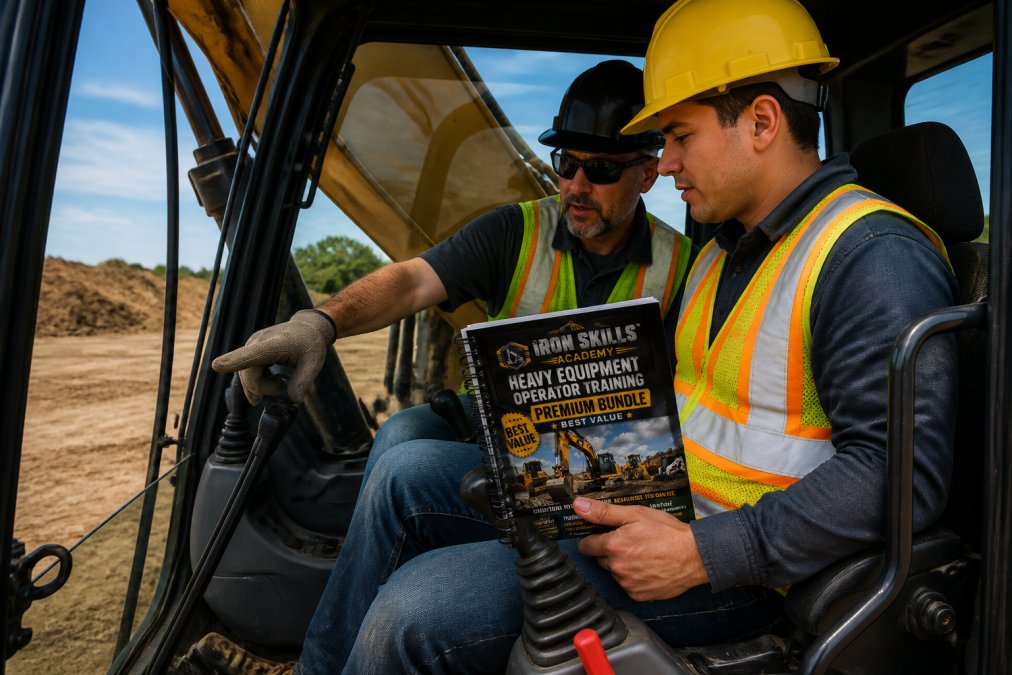
Structured training delivers results that on-the-job learning alone cannot match. When operators complete comprehensive training covering equipment-specific controls, safety protocols, and inspection procedures, they enter the field with a foundation that prevents costly mistakes. Iron Skills Academy's Heavy Equipment Operator Training Manual covers essential machinery including excavators, dozers, wheel loaders, skid steers, backhoes, and motor graders, giving operators and instructors the technical expertise required for success.

A common mistake is assuming that years of experience automatically translate to optimal productivity. Experience teaches familiarity, but formal training teaches efficiency. The combination of both creates operators who work safely, maintain equipment properly, and complete tasks in less time.
Training also reduces operator fatigue and ergonomic strain, which directly impacts productivity. When operators understand proper seating, control positioning, and movement patterns, they work longer shifts with fewer errors. This matters because operator error accounts for a significant portion of equipment downtime and maintenance costs.
Implement Construction Equipment Maintenance Best Practices
Preventive maintenance is the difference between equipment that runs reliably and equipment that fails unexpectedly. Yet many contractors still operate on a reactive maintenance schedule, they fix things when they break rather than preventing breaks before they happen.
The data is clear: contractors using telematics and job-cost tracking consistently report 12-18% efficiency gains within one year of implementation. These gains come largely from shifting to predictive maintenance schedules that catch problems before they cause downtime. Instead of waiting for a hydraulic hose to rupture on a job site, preventive maintenance identifies wear patterns and replaces components before failure.
Effective maintenance schedules are based on equipment operating hours, not calendar time. A piece of equipment that runs 500 hours per year needs different service intervals than one running 2,000 hours. Tracking actual operating hours, not guessing based on calendar dates, ensures maintenance happens at the right time. This is where telematics systems become invaluable, providing real-time data on equipment runtime and condition.
What most guides miss is that maintenance intervals vary by equipment type and operating conditions. An excavator operating in sandy soil experiences different wear patterns than one working in rocky terrain. The maintenance manual provides baseline intervals, but experienced operators and maintenance teams adjust based on site conditions and observed wear. This adaptive approach prevents unnecessary maintenance while ensuring nothing gets overlooked.
Create a maintenance checklist for each equipment type in your fleet. Include pre-operation inspections that operators perform daily, routine service intervals based on operating hours, and seasonal maintenance tasks. Assign responsibility clearly, specify who performs each task, when it happens, and how it gets documented. This prevents the common scenario where everyone assumes someone else is handling maintenance, and critical tasks slip through.
Reduce Heavy Equipment Idle Time Reduction
Idle time is the hidden productivity killer. Equipment sitting idle generates no revenue while consuming fuel, accumulating maintenance costs, and tying up capital. The average contractor can expect 800 to 900 productive hours annually from a typical piece of equipment, translating to a productivity rate of only 62%, meaning 38% of potential productive time is lost to idle periods.
Equipment idle time in the construction industry averages around 30% of scheduled operating hours, but this varies widely based on project planning, weather, and equipment deployment. Some fleets operate at 50% idle time or higher, while well-managed operations reduce this to 20%. That gap represents massive opportunity.
The first step is measuring idle time accurately. Many contractors estimate idle time based on intuition or rough calculations. Real data reveals the actual problem. Telematics systems automatically track when equipment is running, idling, and sitting completely inactive. This data exposes patterns: equipment parked between jobs, machines waiting for materials or instructions, or assets simply underutilized because dispatching is inefficient.
Once you understand your idle time, attack the root causes. Most idle time falls into three categories: scheduling gaps between jobs, inefficient project planning that doesn't align equipment to task sequences, and poor fleet deployment. Scheduling gaps are often unavoidable, but they can be minimized through better project coordination. Inefficient planning is fixable through improved site logistics and task sequencing. Poor deployment, having the wrong equipment on a job, is preventable through upfront planning.
What nobody tells you about idle time is that it affects operator morale and retention. Operators sitting around between tasks feel unproductive. They're paid to work, not wait. Reducing idle time keeps operators engaged and working, which improves both retention and safety outcomes.
Deploy Telematics for Heavy Equipment Tracking
Telematics systems have transformed fleet management from guesswork into data-driven decision-making. Real-time monitoring of equipment location, operating hours, fuel consumption, and mechanical status gives fleet managers visibility that was impossible a decade ago. The US heavy equipment telematics market is projected to grow from $176.8 billion in 2025 to $323.3 billion by 2030, reflecting the industry-wide recognition that telematics is essential for productivity.
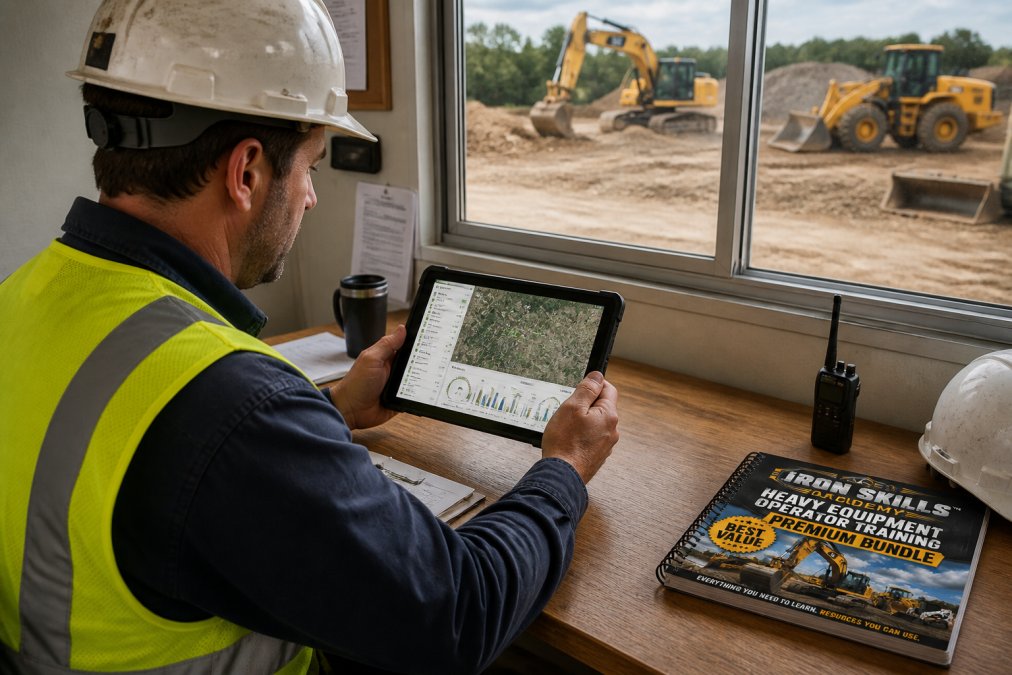
A telematics system answers critical questions: Where is each piece of equipment right now? How many hours has it run this month? What's the fuel consumption rate? Are there any mechanical alerts that need attention? This information allows you to optimize equipment allocation, identify maintenance issues before they cause downtime, and catch operator behavior that's reducing efficiency or safety.
Yet here's the gap that most fleets struggle with: 74% of operators cite data accessibility as the biggest barrier to improving use. While 87% of fleets have invested in digital tools, 75% still rely on manual logs, and only 28% have a fully implemented digital tracking system. The technology exists, but many organizations haven't fully integrated it into their workflows.
Implementing telematics effectively requires more than installing hardware. You need to establish processes for reviewing and acting on the data. Assign someone responsibility for monitoring alerts, analyzing trends, and making decisions based on insights. Set up regular reports that show idle time, fuel efficiency, maintenance needs, and equipment use by job and by operator. Review these metrics weekly or monthly depending on your operation size.
The real value of telematics emerges when you use it to change behavior. If data shows that a particular operator is running equipment inefficiently, use that insight in training. If idle time spikes during a specific project, investigate why and adjust scheduling. If fuel consumption increases unexpectedly, check for mechanical issues. Telematics is only valuable if it drives action.
Optimize Project Planning and Equipment Scheduling
Poor project planning creates cascading productivity problems. Equipment gets assigned to jobs inefficiently, sits waiting for materials or instructions, or gets moved between sites unnecessarily. Better planning prevents these issues before they happen.
Effective project planning aligns equipment needs with task sequences and job site logistics. Before a project starts, map out what equipment is needed for each phase, when each piece should arrive on site, and how long it will be needed. This prevents both underutilization (equipment sitting idle) and bottlenecks (equipment arriving too late and delaying work).
External factors such as design changes or scope changes significantly affect construction equipment productivity. Weather, material availability, and site access also influence how efficiently equipment operates. The best planning accounts for these variables and builds flexibility into schedules. If rain is forecast, have a backup plan for equipment that can't operate in wet conditions. If a material delivery is delayed, know which equipment can be redeployed to other tasks.
Site optimization requires thinking about equipment placement, material staging, and workflow logistics. A wheel loader that's positioned far from material piles wastes time traveling. A dozer working in an area with poor site access spends hours maneuvering. Proper site preparation, clearing access roads, staging materials close to work areas, and positioning equipment strategically, multiplies productivity.
What most contractors get wrong is treating scheduling as a once-per-project task. Effective scheduling is dynamic. As conditions change, adjust equipment allocation. If a task finishes ahead of schedule, move equipment to the next task rather than letting it sit. If a task runs behind, bring in additional equipment to accelerate progress. Responsive scheduling keeps equipment working and prevents idle time.
| Planning Element | Impact on Productivity | Implementation |
|---|---|---|
| Equipment assignment by task | Prevents wrong equipment on jobs | Map equipment needs per project phase |
| Arrival timing | Eliminates idle waiting | Coordinate delivery with task start dates |
| Site logistics | Reduces travel and maneuvering time | Stage materials, clear access routes |
| Schedule flexibility | Adapts to delays and changes | Monitor progress, adjust daily |
| Equipment repositioning | Fills gaps between jobs | Deploy idle equipment to active projects |
Measure and Track Productivity Gains
You can't improve what you don't measure. Yet many contractors operate without clear metrics for equipment productivity. They know things could be better, but they don't have data showing exactly where the problems are or whether improvements are working.
Start with baseline metrics. Calculate your current productivity rate: total productive hours divided by total available hours. For most fleets, this reveals that 35-40% of potential productive time is being lost. Measure idle time separately, noting whether it's due to scheduling gaps, equipment downtime, or underutilization. Track fuel consumption per operating hour to identify inefficiency. Document maintenance costs and downtime incidents to see which equipment is most problematic.
Once you have baseline metrics, set specific targets. Instead of a vague goal to "improve productivity," aim for concrete improvements: reduce idle time from 35% to 25%, increase productive hours per machine by 200 annually, or cut fuel consumption per hour by 10%. These targets give your team something to work toward.
Implement a tracking system that captures the data you need. Telematics systems automate much of this, but you need to establish processes for extracting, analyzing, and reporting the data. Create monthly reports showing productivity metrics by equipment type, by job, and by operator. Identify trends: is productivity improving? Which equipment or operators are performing well? Where are the biggest opportunities?
The thing nobody tells you about measurement is that it changes behavior. When operators and supervisors know their productivity is being tracked, they become more conscious of efficiency. When fleet managers see idle time data, they adjust scheduling. When equipment maintenance issues are documented, they get fixed faster. Transparency drives improvement.
Review your metrics quarterly and adjust your strategies based on results. If operator training improved productivity by 18%, expand training to more operators. If telematics implementation reduced idle time by 12%, invest in expanding the system to more equipment. If certain equipment consistently underperforms, evaluate whether it should be replaced or redeployed.
Improving heavy equipment productivity requires coordinated action across operator training, maintenance, scheduling, and technology. Iron Skills Academy's comprehensive training programs equip operators with the skills needed to maximize equipment efficiency while maintaining safety standards. By combining structured training with data-driven fleet management, you'll see measurable gains in use rates, reduced downtime, and improved profitability. Get started with Iron Skills Academy's Heavy Equipment Operator Training Manual and begin transforming your fleet's productivity today.
=== FAQ ANSWERS (audit these too, same rules) ===
[1] Q: What are the main factors affecting heavy equipment productivity? A: Operator proficiency, preventive maintenance schedules, equipment idle time, project planning, and fleet management software are the primary drivers. Skilled operators can improve productivity and reduce maintenance costs. External factors like design changes, weather, and equipment age also significantly influence productivity outcomes. A comprehensive approach addressing all these elements yields the best results.
[2] Q: How does heavy equipment operator training impact efficiency and safety? A: Proper operator training directly improves equipment utilization, reduces mechanical failure rates, and enhances site safety. Trained operators understand optimal load factors, proper inspection protocols, and fuel-efficient techniques. Training also reduces downtime from incorrect operation and unsafe practices.
[3] Q: How can telematics for heavy equipment tracking reduce idle time? A: Telematics systems provide real-time monitoring of equipment location, engine hours, idle time, and machine health. This data visibility helps managers identify underutilized assets and adjust scheduling accordingly. The average construction equipment idles 28-38% of operating hours, but contractors using telematics and job-cost tracking report 12-18% efficiency gains within one year. Real-time alerts enable quick response to idle machines, improving overall asset utilization.
[4] Q: What construction equipment maintenance best practices prevent costly downtime? A: Preventive maintenance increases productivity by 25% and reduces breakdowns by 70%. Follow manufacturer-recommended service intervals, conduct pre-operation inspections daily, and use predictive maintenance data from telematics systems to address issues before failure. Track maintenance history for each machine to identify patterns. Addressing maintenance proactively rather than reactively extends equipment lifecycle, reduces emergency repair costs, and keeps machines available for productive work.
Frequently Asked Questions
Q: What are the main factors affecting heavy equipment productivity?
A: Operator proficiency, preventive maintenance schedules, equipment idle time, project planning, and fleet management software are the primary drivers. Skilled operators can improve productivity and reduce maintenance costs. External factors like design changes, weather, and equipment age also significantly influence productivity outcomes. A comprehensive approach addressing all these elements yields the best results.
Q: How does heavy equipment operator training impact efficiency and safety?
A: Proper operator training directly improves equipment utilization, reduces mechanical failure rates, and enhances site safety. Trained operators understand optimal load factors, proper inspection protocols, and fuel-efficient techniques. Training also reduces downtime from incorrect operation and unsafe practices.
Q: How can telematics for heavy equipment tracking reduce idle time?
A: Telematics systems provide real-time monitoring of equipment location, engine hours, idle time, and machine health. This data visibility helps managers identify underutilized assets and adjust scheduling accordingly. The average construction equipment idles 28-38% of operating hours, but contractors using telematics and job-cost tracking report 12-18% efficiency gains within one year. Real-time alerts enable quick response to idle machines, improving overall asset utilization.
Q: What construction equipment maintenance best practices prevent costly downtime?
A: Preventive maintenance increases productivity by 25% and reduces breakdowns by 70%. Follow manufacturer-recommended service intervals, conduct pre-operation inspections daily, and use predictive maintenance data from telematics systems to address issues before failure. Track maintenance history for each machine to identify patterns. Addressing maintenance proactively rather than reactively extends equipment lifecycle, reduces emergency repair costs, and keeps machines available for productive work.
This article was written using GrandRanker