

Table of Contents
- Why Equipment Operators Need Formal Training
- NCCER Alternative for Equipment Training: Key Options
- How to Verify Operator Proficiency Standards Across Programs
- Heavy Equipment Training Duration: What to Expect
- Simulation-Based Operator Training vs. Hands-On Learning
- Comparing Cost, Employer Acceptance, and Career Outcomes
- Making Your Choice: Which Training Path Fits Your Goals
- Conclusion
Last Updated: August 24, 2026
According to Dataintelo's 2026 [Heavy Equipment(/products/digital-product) Training Simulator Market Report | dataintelo.com], the global heavy equipment training simulator market was valued at $1.8 billion in 2025 and is projected to reach $4.1 billion by 2034, expanding at a compound annual growth rate of 9.5%. The construction industry increasingly demands structured, verifiable competency pathways. At Iron Skills Academy, we've tracked this evolution closely, and NCCER alternatives for equipment training are proliferating to meet that demand.
The challenge is choosing the right path when multiple certification bodies, simulator programs, and manufacturer-based options all claim to prepare operators effectively. This guide breaks down the real alternatives to NCCER, what sets them apart, and which aligns with your career goals.
Why Equipment Operators Need Formal Training
Professional equipment operation requires more than mechanical intuition. According to the Occupational Outlook Handbook's 2025 Job Outlook for Construction Equipment Operators, about 46,200 openings for construction equipment operators are projected annually over the next decade, yet many sit unfilled because employers demand proof of competency.
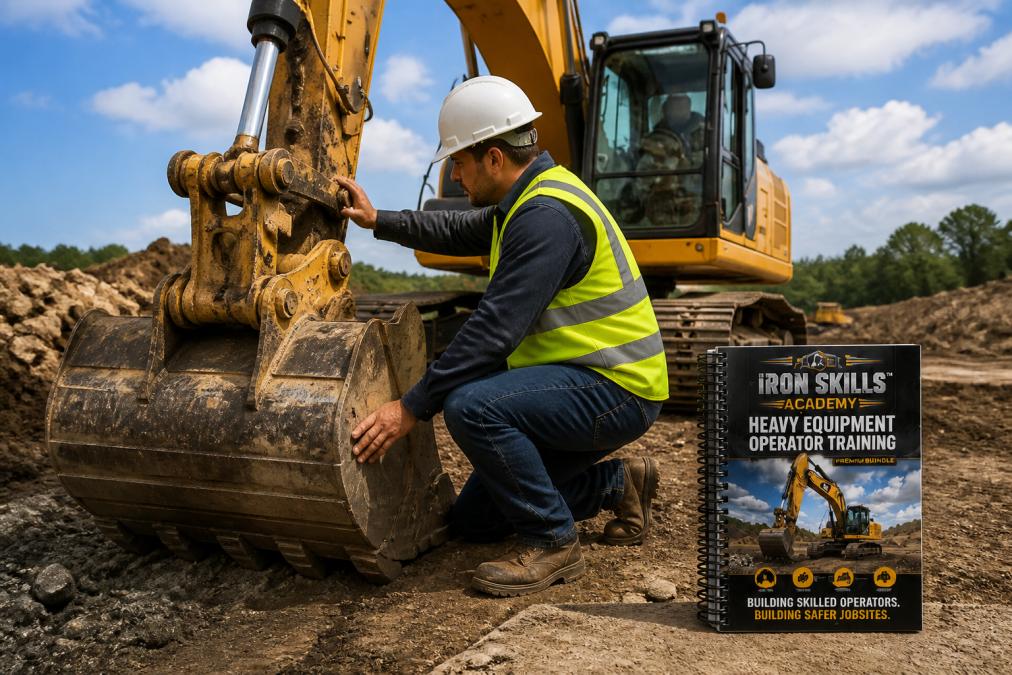
A trained operator catches equipment issues before catastrophic failures and understands ground conditions, load stability, and hazard recognition. According to NCCER's 2026 report on craft training effectiveness, companies that train achieve labor productivity targets over 65% of the time, compared to 53% for those that don't. More than 80% of respondents said trained workers reach productivity 6-18 months faster than those learning only through informal experience.
Formal training creates a standardized baseline. When an operator completes a structured program, an employer knows exactly what skills that operator possesses.
NCCER Alternative for Equipment Training: Key Options
NCCER isn't the only path to credibility in equipment operations. Several alternatives have emerged, each with distinct strengths.
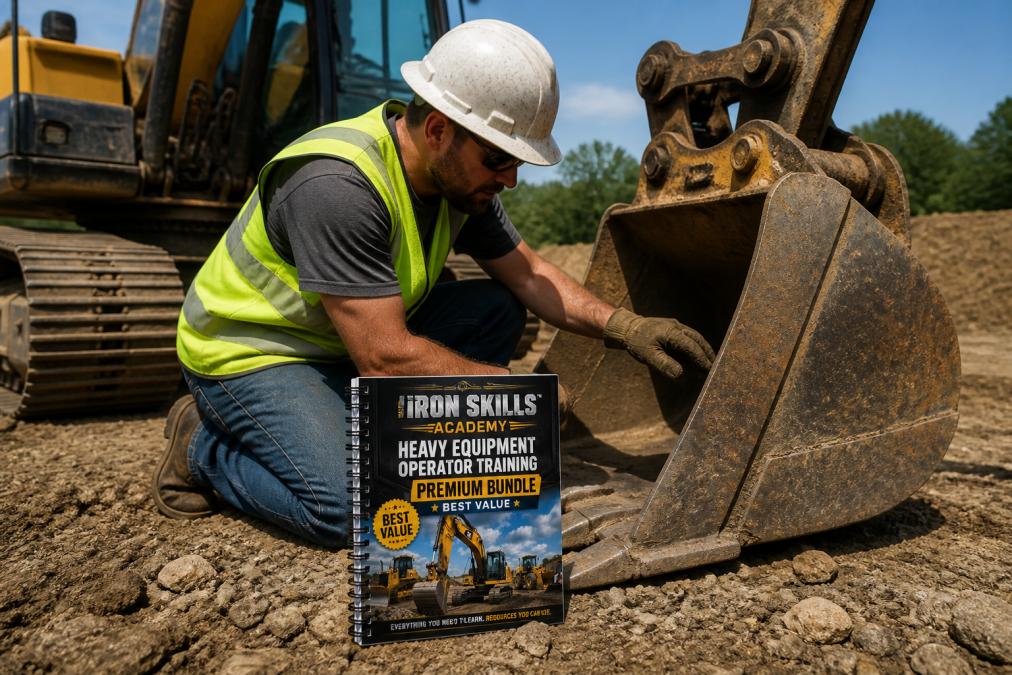
Iron Skills Academy Heavy Equipment Operator Training
Iron Skills Academy provides a comprehensive, self-paced alternative to traditional certification bodies, centering on building operator fundamentals before hands-on work begins.
The Iron Skills Academy™ Heavy Equipment Operator Training Manual - Student Edition covers heavy-equipment training chapters spanning excavator, dozer, wheel loader, skid steer, and backhoe fundamentals. It includes pre-operation inspections, jobsite safety, ground condition assessment, rigging awareness, and preventive maintenance. The package includes a 200-question practice bank, a 50-question final assessment, printable operator resources, and a course-completion certificate.

This approach emphasizes inspection knowledge and machine awareness, the thinking skills that separate safe operators from reckless ones. For new operators preparing for supervised hands-on training or instructors building structured curriculum, this provides the foundation layer that accelerates competency.
Best for: New operators building foundational knowledge before field training, instructors needing structured curriculum materials, companies standardizing operator onboarding.
Cost: $30 for the Student Edition; $40 for the Premium Bundle.
Employer acceptance: Iron Skills Academy materials function as educational resources and operator-development tools. Completion doesn't constitute OSHA certification or employer authorization by itself; it's a prerequisite to hands-on evaluation. For companies standardizing internal training, the structured curriculum creates a measurable baseline.
The Iron Skills Academy™ Instructor Training Package at $99 includes instructor materials, student resources, practice assessments, evaluation frameworks, and daily inspection resources across all major equipment types.

NCCCO Crane Certification
The National Commission for the Certification of Crane Operators (NCCCO) dominates the crane industry. While NCCER offers crane training, NCCCO is often preferred because its practical examination standards are more stringent, with tighter time constraints that mirror real-world jobsite pressure.
Best for: Crane operators, riggers, and heavy lifting specialists.
Cost: $500-$1,500 for full certification pathway.
Employer acceptance: Extremely high in crane and rigging industries.
Limitation: NCCCO is crane-specific. If you operate multiple equipment types, you'll need additional certifications.
State-Specific Operator Certification Programs
Several states operate their own operator certification systems, particularly for water treatment, wastewater, and environmental equipment operation. The Wisconsin DNR Operator Certification Program hosts in-person exam sessions approximately three times monthly.
These programs are regulatory requirements in their jurisdictions. If you operate in a regulated sector, your state's certification program is often mandatory.
Best for: Operators in regulated industries (water treatment, environmental services, utilities).
Cost: $50-$300 per exam.
Employer acceptance: 100% required in regulated sectors.
Limitation: Highly specialized to specific equipment and jurisdictions.
Manufacturer-Based Heavy Equipment Training
Most major equipment manufacturers (Caterpillar, Komatsu, John Deere, Volvo) offer factory-authorized training programs focusing on equipment-specific operation, maintenance, and diagnostics. This training is deep but narrow, you'll master that specific brand's machines but won't cover broader safety principles that transfer across equipment types.
Best for: Operators specializing in one brand's equipment, technicians requiring diagnostic skills, fleet operators needing standardized training.
Cost: $200-$800 per course.
Employer acceptance: Strong within companies using that brand exclusively.
Limitation: Brand-specific knowledge doesn't transfer across manufacturers.
How to Verify Operator Proficiency Standards Across Programs
Different certification bodies use different standards. NCCER uses written examination plus practical skills assessment. NCCCO uses tighter time constraints. State programs focus on regulatory compliance. Manufacturer programs emphasize brand-specific systems.
When evaluating a training program, ask three specific questions:
1. What does the written assessment measure? A 50-question test on safety fundamentals differs from a 100-question technical exam.
2. What are the practical evaluation criteria? Does the program evaluate speed, accuracy, or both? How long is the hands-on assessment?
3. Who conducts the evaluation? Third-party certification bodies provide external credibility. In-house training depends on evaluator consistency. Manufacturer programs use factory-trained assessors.
| Certification Body | Written Test | Practical Assessment | Time Commitment | Employer Recognition |
|---|---|---|---|---|
| NCCER | Standardized module tests | Equipment-specific evaluation | 40-120 hours | High across construction |
| NCCCO | Standardized written exam | Timed practical exam | 60-80 hours | Very high in crane/rigging |
| State Programs | Regulatory-focused exam | Jurisdiction-specific evaluation | 20-60 hours | Required in regulated sectors |
| Manufacturer Programs | Brand-specific technical test | Brand-specific hands-on | 16-40 hours | High within that brand |
| Iron Skills Academy | Chapter checks + 50-question final | Self-assessment + instructor evaluation | 30-60 hours | Foundational; requires hands-on follow-up |
Heavy Equipment Training Duration: What to Expect
Training duration varies dramatically depending on the program and your starting point. Structured classroom-based programs typically require 40-120 hours of instruction. Hands-on field training adds another 40-200 hours depending on equipment complexity. A complete pathway from zero experience to independent operator typically spans 3-6 months.
According to NCCER's 2026 research on craft training effectiveness, trained workers reach full productivity 6-18 months faster than those learning only through informal experience.
Iron Skills Academy's Student Edition is designed as a pre-field resource, typically completed in 30-60 hours. It's not meant to replace hands-on training; it accelerates the learning curve before you step into an equipment cab.
Real timeline example: A new operator might complete Iron Skills Academy's foundational manual (40 hours), then undergo 60 hours of supervised hands-on training, reaching basic competency in 8-12 weeks. Reaching true proficiency typically takes 6-12 additional months of field experience.
Simulation-Based Operator Training vs. Hands-On Learning
Simulators solve a real problem: equipment is expensive, and letting new operators practice on $400,000 machinery carries risk. High-resolution simulation platforms now capture tactile feedback and motion dynamics that matter for skill transfer.
However, simulators have a ceiling. They excel at teaching control inputs, spatial awareness, and basic procedures but are poor at teaching judgment, when to stop because ground conditions are unsafe, how to read equipment sounds signaling mechanical problems, or what to do when something unexpected happens.
Research supports combining both: simulation for foundational skills, hands-on for judgment development. Operators trained on simulators before field work typically require 15-25% less hands-on supervision time, but they still need that hands-on phase.
Simulation strengths: Safe, repeatable practice; consistent instruction; immediate feedback; emergency procedure practice without risk.
Hands-on strengths: Teaches real-world judgment and hazard recognition; builds confidence with actual equipment; develops equipment-specific muscle memory; teaches troubleshooting.
Best approach: Use simulation or foundational classroom training to build knowledge and basic skills, then move to supervised hands-on training to develop judgment and proficiency.
Comparing Cost, Employer Acceptance, and Career Outcomes
The three factors that matter when choosing a training path are cost, employer perception, and earning potential.
Cost analysis: NCCER programs range from $500-$2,000. NCCCO crane certification costs $800-$1,500. State programs cost $50-$300. Manufacturer programs cost $200-$800. Iron Skills Academy's Student Edition costs $30, making it the lowest-cost entry point, though it's designed as foundational, not a complete certification pathway.
Employer acceptance: NCCER credentials are recognized across construction. NCCCO is essential for crane work. State certifications are required in regulated sectors. Manufacturer certifications are valuable within companies using that brand. Iron Skills Academy materials function as educational resources employers use to standardize training, not credentials replacing certification.
Career outcomes: According to the Occupational Outlook Handbook's 2025 Job Outlook data, construction equipment operator employment is projected to grow 4% from 2024 to 2034, with median annual wages of $58,320 in May 2024. However, [ATS Heavy Equipment(/blogs/news/heavy-equipment-training-packages-pricing) Schools' 2026 research on labor market trends | atsheavyequipment.com] found heavy equipment labor needs are growing 9%, more than double the national average. Operators with formal credentials and multiple certifications earn more and face fewer job gaps. Sixty-five percent of equipment industry employers say labor shortage has forced them to raise wages, meaning certified operators can negotiate better compensation.
| Factor | NCCER | NCCCO | State Programs | Manufacturer | Iron Skills Academy |
|---|---|---|---|---|---|
| Cost | $500-$2,000 | $800-$1,500 | $50-$300 | $200-$800 | $30-$99 |
| Time to complete | 40-120 hours | 60-80 hours | 20-60 hours | 16-40 hours | 30-60 hours |
| Employer recognition | Very high (broad) | Very high (crane-specific) | Required (regulated sectors) | High (brand-specific) | Foundational (requires follow-up) |
| Career advancement | Strong across construction | Essential for crane work | Required for compliance | Good within brand | Good as prep tool |
| Best for | General equipment operators | Crane specialists | Regulated industries | Brand-specific roles | Foundational knowledge |
Making Your Choice: Which Training Path Fits Your Goals
Your choice depends on three variables: your current experience level, your target career path, and your timeline.
If you're starting from zero: Begin with foundational training like Iron Skills Academy's manual or an NCCER program. The manual is cheaper and faster; NCCER is more recognized. Then move to hands-on training with a mentor or instructor. This path takes 3-6 months and costs $500-$1,500.
If you're targeting a specific equipment type: NCCCO for cranes, manufacturer training for brand-specific roles, state certification for regulated sectors. These are non-negotiable credentials in their domains.
If you're an instructor or training program: Iron Skills Academy's Instructor Package provides structured curriculum that accelerates operator readiness and standardizes training across multiple instructors and cohorts.
If you're an employer: Evaluate whether you need operators with formal external credentials (NCCER, NCCCO) or whether standardized internal training meets your needs. Many companies use both.
Equipment operation requires knowledge, hands-on skills, and judgment. The best operators combine formal training with deliberate practice and mentorship.
The equipment operator shortage is real and creating opportunity. According to the 2025 Operator Workforce Study, contractors report an average 12.4% operator vacancy rate and 47 days to fill open positions. That gap exists because formal training has lagged behind demand.
Whether you choose NCCER, NCCCO, state certification, manufacturer training, or begin with Iron Skills Academy's foundational approach, the critical step is choosing a structured path over informal learning. Formal training compresses your learning curve, builds verifiable competency, and positions you for better career outcomes.
Start with Iron Skills Academy's Heavy Equipment Operator Training Manual to build your foundation, then pursue the formal certification that matches your target role. This combination ensures you're both knowledgeable and credible.
Frequently Asked Questions
Q: Is NCCCO certification better than NCCER for heavy equipment operators?
A: NCCCO specializes in crane certifications and uses more stringent practical examination time limits, making it the industry standard for crane operators. NCCER offers broader construction equipment training pathways. Neither is universally 'better', it depends on your equipment focus. For crane operations specifically, NCCCO has greater name recognition and employer acceptance. For general heavy equipment operations (excavators, loaders, dozers), NCCER and alternatives like Iron Skills Academy provide comprehensive craft training that meets industry needs.
Q: How do I verify operator proficiency standards in non-NCCER programs?
A: Check whether the program includes written assessments, practical evaluations, and documented competency verification. Reputable programs provide module testing, knowledge checks, and operator assessment resources. Verify the training covers safety compliance, pre-operation inspections, and equipment-specific fundamentals. Ask employers in your region which certifications they accept. State-specific programs and manufacturer certifications often have published standards. Iron Skills Academy includes 200-question practice banks, final written assessments, and practical evaluation resources to document proficiency.
Q: How long does heavy equipment training duration typically take?
A: Most foundational programs take 40-80 hours of structured coursework, with hands-on training adding 100-200+ hours depending on equipment complexity. Simulation-based training may compress classroom time to 20-40 hours. Full certification programs including written exams and practical assessment typically span 3-6 months for part-time learners or 4-8 weeks for full-time programs. Iron Skills Academy's student manual can be completed in 30-50 hours of self-paced study, though hands-on supervised training remains essential before independent operation.
Q: What's the difference between simulation-based operator training and hands-on learning?
A: Simulation-based training uses rotation-motion platforms and high-resolution simulation to teach controls and spatial awareness in a controlled environment, reducing equipment damage risk and training costs. Hands-on field experience develops real-world judgment about ground conditions, machine stability, and jobsite hazards. Industry research shows trained workers reach productivity 6-18 months faster than those learning only informally. Most effective programs combine both: simulation for foundational controls, then supervised hands-on operation with qualified instructors on actual equipment.
Q: Do employers accept non-NCCER equipment training certifications?
A: Acceptance depends on your region and employer. Large national contractors often prefer NCCER credentials, but many regional and local employers accept alternative certifications, state programs, and manufacturer training. Research shows 67% of contractors have declined projects due to operator shortages, making qualified operators valuable regardless of certification body. Verify employer requirements before enrolling. Iron Skills Academy training provides documented skill verification and professional development pathways that employers use to evaluate knowledge and identify training gaps.
This article was written using GrandRanker