

Table of Contents
- Why Equipment Operators Need More Than Online-Only Training
- OSHA Heavy Equipment Certification Requirements and Compliance
- How to Verify Operator Proficiency Standards in Training Programs
- Onsite Heavy Equipment Operator Training vs. Online Alternatives
- Top Training Alternatives to 360Training for Equipment Operators
- Comparing Training Quality: What Employers Actually Look For
- Conclusion
Last Updated: August 28, 2026
Why Equipment Operators Need More Than Online-Only Training
The construction industry faces a critical operator shortage. According to the U.S. Bureau of Labor Statistics, approximately 46,200 job openings exist annually for equipment operators through 2034. Online-only training, while convenient, cannot produce job-ready professionals because hands-on competency cannot develop through a screen. Heavy equipment operators need muscle memory, must feel how machines respond to control inputs, and require spatial awareness that prevents costly mistakes and injuries.
Research from Northern Arizona University's [equipment operator training(/products/digital-product) study | nau.edu] found that simulators and structured programs can replicate hands-on learning at a fraction of the cost of traditional on-site training. The global heavy equipment training simulator market was valued at $1.8 billion in 2025 and is projected to reach $4.1 billion by 2034, expanding at 9.5% annually, according to Dataintelo's Heavy Equipment Training Simulator Market Report. This growth reflects industry recognition that simulators and blended learning approaches work.
OSHA Heavy Equipment Certification Requirements and Compliance
OSHA compliance is the foundation of every legitimate equipment operator training program. OSHA doesn't certify heavy equipment operators directly but establishes workplace safety standards employers must follow. Training programs must cover OSHA's key compliance areas: fall protection, hazard communication, electrical safety, personal protective equipment (PPE), and equipment-specific hazards.
Many training providers claim "OSHA certification" when they actually mean OSHA-aligned training. True OSHA compliance means the program addresses standards in the OSHA Construction Standards (29 CFR 1926). A program can be OSHA-aligned without being OSHA-certified, the distinction matters when evaluating alternatives.
According to the 2025 Operator Workforce Study, 78% of operators have completed OSHA safety training, indicating widespread industry adoption of safety-focused instruction.
When comparing training alternatives, ask whether the program covers OSHA standards for your specific equipment type.
How to Verify Operator Proficiency Standards in Training Programs
Not all training alternatives are equal. Employers struggle to distinguish between programs that produce genuinely job-ready operators and those that simply issue certificates.
Start by examining the program's assessment structure. Legitimate training includes three components: written knowledge assessment, practical skills evaluation, and safety protocol demonstration. If a program skips practical evaluation or offers only online testing, proficiency verification is incomplete.
The most reliable indicator is whether the program uses recognized industry standards. The National Commission for the Certification of Crane Operators (NCCCO) and NCCER (National Center for Construction Education and Research) set benchmarks that employers trust.
Ask specific questions about evaluation methodology:
- Does the program require supervised hands-on practice with actual equipment or certified simulators?
- Who conducts the practical assessment, an independent evaluator or the training provider?
- Does the program document competency in specific equipment types (excavators, dozers, wheel loaders)?
- Are there prerequisites or entry-level requirements?
Onsite Heavy Equipment Operator Training vs. Online Alternatives
Onsite Training Advantages: Hands-on instruction with real or simulator-based equipment builds muscle memory and operational confidence. Instructors provide immediate feedback and correct technique errors in real time. Onsite programs typically result in faster proficiency development and higher safety standards. External simulator-based facilities reduce costs to $15,000-$25,000 per operator while maintaining comparable skill outcomes, compared to $40,000-$50,000 at traditional facilities.
Online Training Advantages: Flexibility is the primary benefit. Operators can study theoretical content around work schedules and progress at their own pace. Online platforms eliminate travel costs and scheduling conflicts. For foundational knowledge and safety concepts, online instruction works well.
The critical limitation: online training cannot develop operational proficiency alone.
Blended Approach (Hybrid): Modern training increasingly combines online theoretical instruction with supervised hands-on practice. Operators study safety and equipment fundamentals online, then complete practical training with qualified instructors. This approach reduces costs while maintaining proficiency standards and is becoming the industry standard.
Top Training Alternatives to 360Training for Equipment Operators
Iron Skills Academy: Structured Foundation Before Hands-On Work
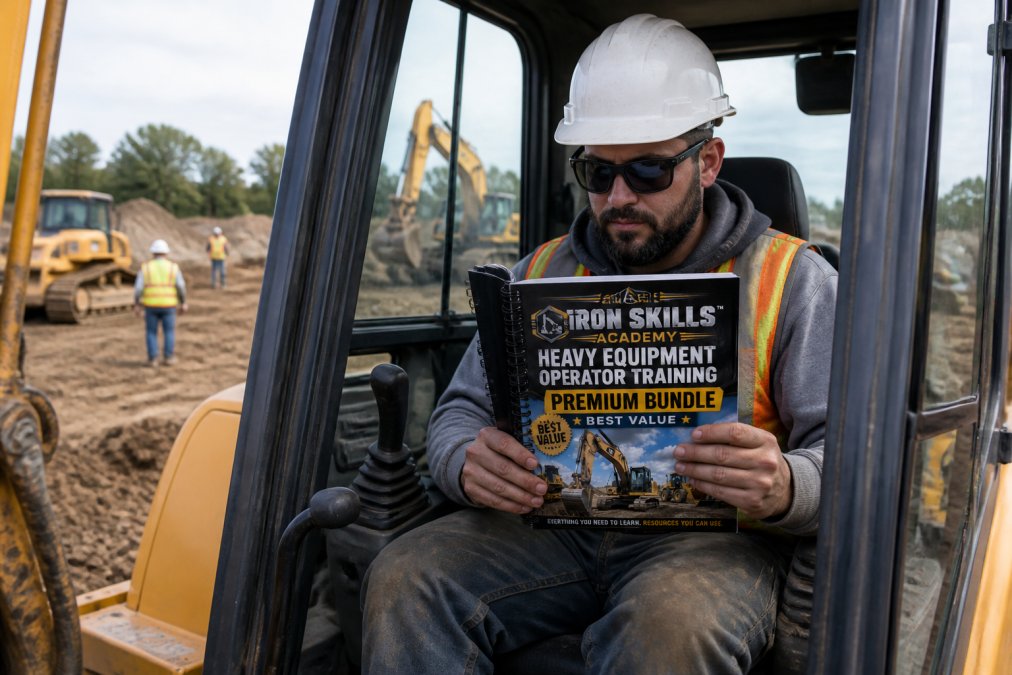
Iron Skills Academy provides comprehensive heavy equipment training resources designed to build foundational knowledge before operators advance to hands-on practice. The core offering is the Iron Skills Academy Heavy Equipment Operator Training Manual, available in Student Edition ($30) and Premium Bundle ($40). The Student Edition covers essential heavy-equipment safety, inspections, operating fundamentals, machine awareness, maintenance, and professional operator judgment. The curriculum includes essential machinery including excavators, dozers, wheel loaders, skid steers, backhoes, and motor graders. Each chapter includes knowledge checks, a practice bank, and a final assessment.
The Instructor Training Package ($99) provides structured teaching materials, student resources, practice questions with answer keys, daily inspection resources, practical evaluation tools, and training documentation, valuable for vocational schools and construction companies building internal training programs.

Iron Skills Academy positions itself as foundational preparation designed for operators preparing for supervised hands-on training or strengthening existing knowledge.
NCCER Certification: National Industry Standard Recognition
NCCER (National Center for Construction Education and Research) certification carries significant weight in construction hiring. The program combines classroom instruction with hands-on practical evaluation across multiple specializations: excavation equipment, dozers, wheel loaders, and other machinery.
The key advantage is national recognition. NCCER credentials transfer across employers and regions. Typical programs run 4-6 weeks, combining classroom and hands-on instruction, with costs ranging from $2,000-$4,000 per operator. The limitation is availability, NCCER training requires authorized training centers, which aren't available everywhere.
Caltrans Heavy Highway Construction Trades Academy: Free Entry-Level Path
For operators in California, the Caltrans Heavy Highway Construction Trades Academy offers free, state-sponsored training. The 2026 sessions include programs in San Diego County (January 26 - March 12), Alameda County (June 1 - July 16), and Kern County (September 28 - November 10).
These 7-week academies provide tuition-free instruction and award certifications including Heavy Equipment Operator Certification and OSHA 10 for Construction. The advantage is zero tuition cost and recognized state certification. The limitation is geographic availability and competitive enrollment.
Heavy Equipment Operator Fast-Track Programs: Accelerated Credentials
Fast-track programs compress training into intensive 4-week formats. National Training, Inc.'s Heavy Now Program combines 72 hours of classroom instruction with 136 hours of hands-on equipment projects. These programs typically cost $3,000-$6,000 per operator and result in nationally recognized NCCER credentials.
Fast-track programs work for motivated individuals but aren't ideal for part-time learners or those needing flexible scheduling.
Comparing Training Quality: What Employers Actually Look For
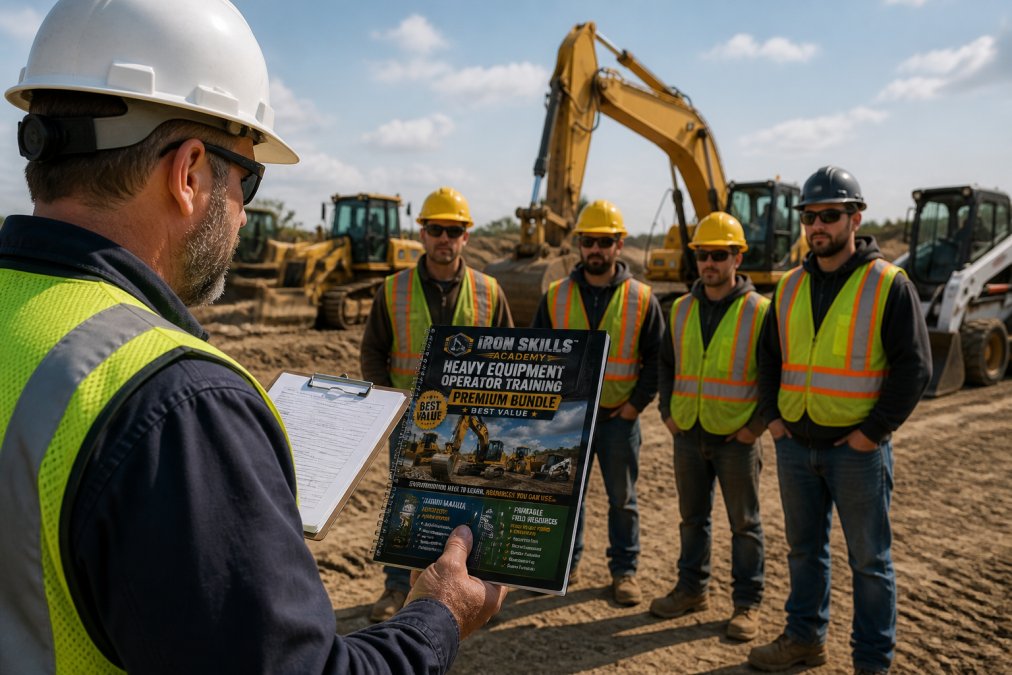
Employers evaluate training alternatives using specific criteria:
Practical Competency Assessment: The most important criterion is whether the program includes supervised hands-on evaluation. Programs that skip practical assessment are red flags.
Safety Protocol Compliance: Employers verify that training covers OSHA standards, hazard recognition, and equipment-specific safety.
Equipment-Specific Training: Employers prefer candidates trained on the specific machinery they'll operate rather than generic operator training.
Recognition and Credibility: Certifications from recognized bodies (NCCER, state programs, industry associations) carry more weight than proprietary certificates.
Instructor Qualifications: Programs taught by experienced equipment operators and safety professionals carry more credibility than those taught by generic instructors.
Documentation and Record-Keeping: Employers need clear documentation of training completion, competency assessment results, and certification status.
The most competitive programs combine these elements: structured curriculum, hands-on practical training, recognized certification, qualified instructors, and comprehensive documentation. They're not the cheapest options, but they produce operators employers actively want to hire.
The construction industry's operator shortage won't resolve through online courses alone. The most effective training alternatives to 360training combine theoretical instruction with supervised hands-on practice, align with industry safety standards, and provide recognized credentials. Iron Skills Academy's foundational training materials, NCCER's national certification, state-sponsored programs like Caltrans, and accelerated fast-track options each serve different needs.
Your choice depends on your situation: timeline, budget, location, and prior experience. Prioritize programs that include practical competency assessment and recognized certification. Start your training journey with Iron Skills Academy's structured curriculum to build foundational knowledge before hands-on practice. Start Training with materials designed specifically for operators who want to excel safely in the field.

=== FAQ ANSWERS (audit these too, same rules) ===
[1] Q: Is 360Training legit for OSHA equipment operator certification? A: 360Training provides OSHA-compliant safety training, but it focuses on general workplace safety rather than heavy equipment operation certification. For equipment operators, OSHA requires hands-on practical evaluation and machine-specific instruction beyond online modules. Many employers prefer training programs that combine online theory with onsite hands-on instruction and documented proficiency assessment. Verify any training provider's accreditation and whether they offer the practical evaluation component OSHA requires.
[2] Q: What should I look for in a heavy equipment training provider? A: Look for programs that include: OSHA-aligned safety content, hands-on instruction with real equipment, documented skill assessment and practical examination, coverage of equipment maintenance and pre-operation inspections, and evidence of workplace safety outcomes. Employers specifically value training that produces operators who can perform proficiency evaluations and understand hazard recognition. Ask for case studies showing safety improvements or cost savings. Iron Skills Academy's training manual provides the foundational knowledge before hands-on work, while programs like NCCER add nationally recognized credentials.
[3] Q: Are online-only certifications enough for heavy equipment operation? A: No. Online-only training cannot meet OSHA practical evaluation requirements or develop the muscle memory and confidence operators need. Legitimate programs require a clear path to hands-on experience for full certification. Blended learning combining online theory with onsite practical training is the industry standard for operator proficiency.
[4] Q: How do I verify if an operator training program meets industry standards? A: Check whether the program includes OSHA compliance standards, practical skill assessment by qualified instructors, and documentation of hands-on training hours. Verify the trainer's credentials and whether they cover all required equipment types (excavators, dozers, wheel loaders, backhoes, skid steers, motor graders). Ask about the program's safety record and employer feedback. Accreditation through NCCER or similar bodies adds credibility. Programs should provide written assessments, practical evaluations, and completion certificates that employers recognize.
Frequently Asked Questions
Is 360Training legit for OSHA equipment operator certification?
360Training provides OSHA-compliant safety training, but it focuses on general workplace safety rather than heavy equipment operation certification. For equipment operators, OSHA requires hands-on practical evaluation and machine-specific instruction beyond online modules. Many employers prefer training programs that combine online theory with onsite hands-on instruction and documented proficiency assessment. Verify any training provider's accreditation and whether they offer the practical evaluation component OSHA requires.
What should I look for in a heavy equipment training provider?
Look for programs that include: OSHA-aligned safety content, hands-on instruction with real equipment, documented skill assessment and practical examination, coverage of equipment maintenance and pre-operation inspections, and evidence of workplace safety outcomes. Employers specifically value training that produces operators who can perform proficiency evaluations and understand hazard recognition. Ask for case studies showing safety improvements or cost savings. Iron Skills Academy's training manual provides the foundational knowledge before hands-on work, while programs like NCCER add nationally recognized credentials.
Are online-only certifications enough for heavy equipment operation?
No. Online-only training cannot meet OSHA practical evaluation requirements or develop the muscle memory and confidence operators need. Legitimate programs require a clear path to hands-on experience for full certification. Blended learning combining online theory with onsite practical training is the industry standard for operator proficiency.
How do I verify if an operator training program meets industry standards?
Check whether the program includes OSHA compliance standards, practical skill assessment by qualified instructors, and documentation of hands-on training hours. Verify the trainer's credentials and whether they cover all required equipment types (excavators, dozers, wheel loaders, backhoes, skid steers, motor graders). Ask about the program's safety record and employer feedback. Accreditation through NCCER or similar bodies adds credibility. Programs should provide written assessments, practical evaluations, and completion certificates that employers recognize.
This article was written using GrandRanker