

Table of Contents
- Pre-Operational Inspection and Walkaround
- Dozer Safety Checklist for Operators
- Bulldozer Operating Techniques for Beginners
- How to Improve Dozer Grading Accuracy
- Dozer Maintenance Schedule for Contractors
- Managing Track Slippage and Ground Pressure
- Common Dozer Operation Mistakes and How to Avoid Them
- Conclusion
Last Updated: August 25, 2026
According to the Bureau of Labor Statistics, around 1,000 construction workers are killed on job sites every year in the US, with heavy equipment causing a significant number of these deaths (bls.gov). This guide from Iron Skills Academy covers the essential dozer operation best practices that will help you operate safely, efficiently, and with confidence on any jobsite.

Pre-Operational Inspection and Walkaround
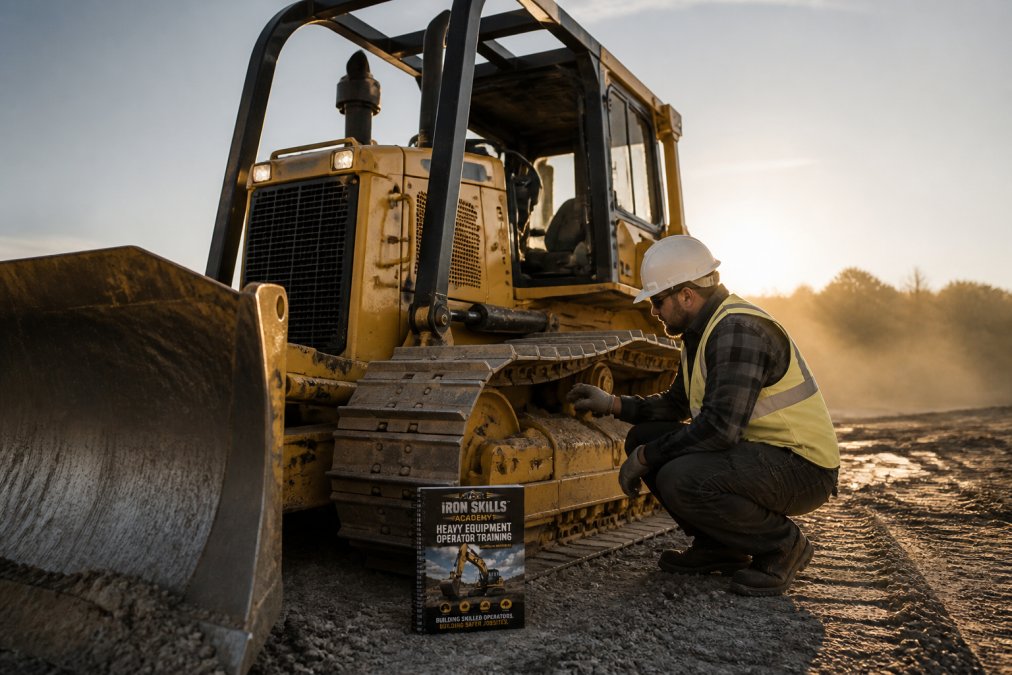
Before you touch the controls, you need to know your machine is safe to operate. A complete walkaround takes 10-15 minutes. Start at the front and move systematically around the entire unit. Check the blade for cracks, bent edges, or hydraulic leaks. Inspect both tracks for broken links, tension issues, or debris. Look at the undercarriage for bent frame components or loose bolts. Check all windows and mirrors for cracks or obstructions. Pay special attention to hydraulic systems, leaks signal problems before major failures occur. Verify that all lights are functioning, test the horn, and check fuel and coolant levels. Document your inspection in writing. If you find a defect, report it immediately and don't operate the equipment.
Dozer Safety Checklist for Operators
Safety on a dozer starts with understanding your environment and your machine's limitations. Every jobsite presents different hazards, slopes, hidden voids, other workers, unstable ground, and your job is to recognize them before they become problems.
PPE Requirements and Blind Spot Awareness
Personal protective equipment is non-negotiable: hard hat, safety glasses, steel-toed boots, and high-visibility clothing. On dusty or muddy sites, add a dust mask or respirator.
A dozer cab is elevated, but you cannot see directly behind the machine, directly in front of the blade when lowered, or to the extreme sides. Workers on foot around a bulldozer are in constant danger of being struck or run over, especially when backing up or turning. Establish a communication protocol with your crew. Use spotters when working near other workers. Require everyone to stay visible and out of blind zones. Use audible backup alarms and strobes.
Starting, Shutting Down, and Emergency Procedures
Insert the key and turn it to "on" without starting. Let the electrical system initialize for 3-5 seconds, then engage the starter. Once running, let the engine idle for 30-60 seconds before engaging any hydraulics. Check your gauges, oil pressure, coolant temperature, fuel level, and warning lights. If anything looks abnormal, shut down and diagnose the problem.
When shutting down, bring the engine to idle. Lower the blade fully and position the ripper in a safe position. Disengage all hydraulic functions. Let the engine idle for 30 seconds before turning off the key. Know where your emergency stop button is located. On most dozers, it's a large red mushroom button near the operator's seat. Pulling it immediately kills engine power and engages the parking brake.
Bulldozer Operating Techniques for Beginners
Operating a bulldozer is fundamentally about precision and control. The machine responds to your inputs, blade position, track speed, gear selection, and hydraulic pressure, and your job is to coordinate these to accomplish work safely and efficiently.
Blade Control and Positioning
The blade is your primary tool. Blade control requires understanding three dimensions: angle, tilt, and pitch.
Angle refers to rotating the blade left or right. Angling the blade 20-30 degrees helps push material to the side. Full angle (45+ degrees) is used for pushing material to the extreme side.
Tilt means raising or lowering the ends of the blade while keeping the cutting edge horizontal. This controls cut depth and helps you follow contours.
Pitch is raising or lowering the entire blade. A lowered blade cuts into material. A raised blade is used for spreading, finishing, or moving over obstacles.
Smooth, gradual blade movements waste less energy and improve accuracy.
Gear Selection and Load Management
Dozers typically have 5-8 forward gears plus reverse. Gear selection depends on material, slope, and distance.
Low gears (1-2) provide maximum power but limited speed. Use these for heavy material, steep slopes, or maximum blade penetration.
Mid gears (3-4) balance power and speed. These are your workhorses for general pushing and dozing operations.
High gears (5-6+) sacrifice power for speed. Use these for light material, flat ground, or moving material long distances.
If the engine sounds labored, tracks are slipping, or you're barely moving forward, you're in too high a gear. Downshift and let the engine do the work. Load management means not overloading the blade. A partial load moved smoothly accomplishes more than a full load that bogs down the machine.
Avoiding Machine Lugging and Stalling
Lugging occurs when the engine works too hard for the current gear, causing RPM to drop and the engine to sound strained. Stalling is the extreme version, the engine shuts off because the load is too great. Both problems have the same solution: downshift.
| Problem | Cause | Solution |
|---|---|---|
| Engine sounds labored, machine slows | Lugging (too high a gear) | Downshift to lower gear |
| Engine shuts off mid-operation | Stalling (extreme overload) | Downshift and reduce blade load |
| Tracks slipping on slope | Insufficient traction or overload | Reduce load, downshift, or change approach |
| Blade not penetrating material | Insufficient angle or pitch | Increase blade angle/pitch or downshift |
How to Improve Dozer Grading Accuracy
Grading means shaping the earth to a specific elevation and slope. It requires precision, patience, and understanding of how the machine responds to your inputs. Before you start, know the target elevation, slope percentage, and existing ground conditions.
Operating on Slopes and Uneven Terrain
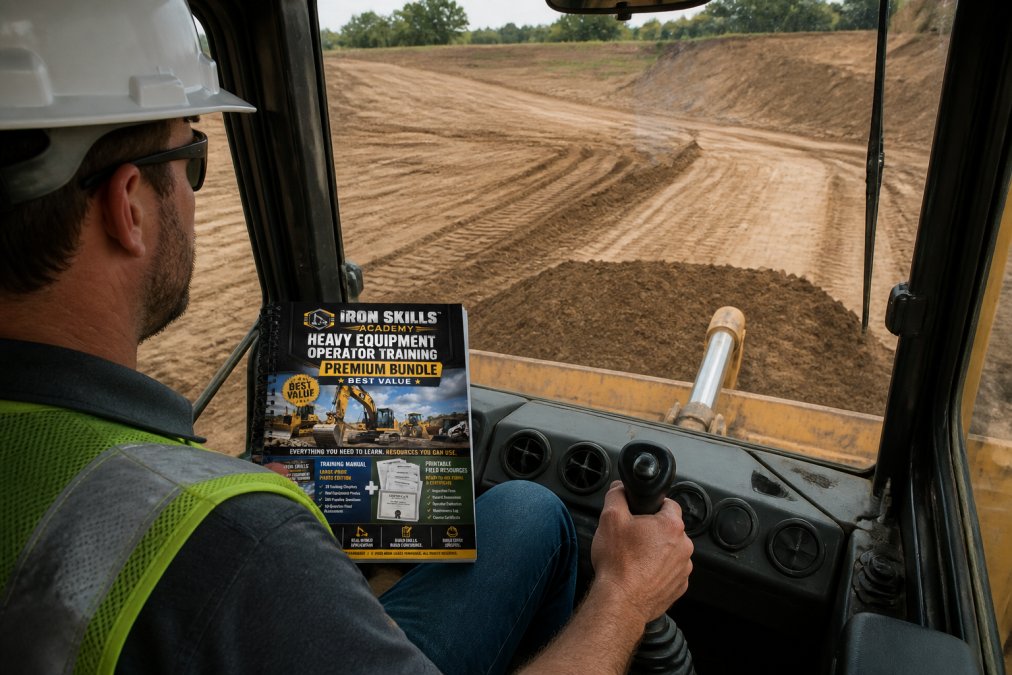
Slopes introduce complexity because gravity works against you. On a steep slope, the machine wants to slide downhill, reducing traction and control. On uphill pushes, the engine has to work harder, requiring downshifting and reduced load.
According to the National Institute for Occupational Safety and Health, 80% of dozer fatalities occurred while working near an edge, hidden void, or on a steep slope. Before starting work on sloped terrain, walk the area and look for drop-offs, erosion patterns, or subsurface voids. Work across the contour rather than up and down when possible. Make multiple passes with light cuts rather than one heavy cut.
GPS and Machine Control Technology
GPS and machine control technology has fundamentally changed how grading is done. Machine control systems use GPS positioning and blade-mounted sensors to automatically adjust blade height and angle to match the design grade. The operator still controls track speed, load management, and overall strategy. The benefit is accuracy and consistency, a machine control system can hold a grade to within 2-3 centimeters across an entire project. Machine control requires proper setup and maintenance. The GPS base station must be positioned correctly. The blade sensors must be calibrated. The design file must be accurate.
Back-Dragging and Bench Cutting Techniques
Back-dragging uses the blade in reverse to pull material toward you rather than pushing it away. This is useful for finishing work, spreading material evenly, or working in confined spaces. To back-drag, lower the blade fully, engage reverse, and pull the material toward you with the blade angled to contain it.
Bench cutting is cutting a level step into a slope. Position the blade perpendicular to the slope, lower it to target depth, and push forward. Both techniques require practice on low-stakes work before tackling more demanding grading projects.
Dozer Maintenance Schedule for Contractors
Routine maintenance reduces major repair expenses, emergency service calls, fuel waste, and premature component failures.
Track and Undercarriage Care
The undercarriage takes the most abuse on a bulldozer. Daily inspection should include checking track tension. Proper tension means you can lift the track at the midpoint about 2-3 centimeters. Check for broken or cracked track links, bent or damaged rollers, and broken sprocket teeth. Every 500 operating hours, have the undercarriage professionally inspected. This includes checking frame alignment, bolt torque, and wear patterns.
Hydraulic Systems and Preventative Maintenance
The hydraulic system powers everything on the dozer. Check hydraulic fluid level daily. Low fluid causes the system to work harder and overheat. Check the fluid condition, it should be clean and amber-colored. Dark, cloudy fluid indicates contamination or overheating.
Change hydraulic fluid according to the manufacturer's schedule, typically every 1,000-2,000 operating hours. Inspect all hydraulic hoses for leaks, cracks, or abrasions. Replace any hose showing damage. The hydraulic filter is your first line of defense against contamination. Change it every 250-500 operating hours. Modern dozers have onboard diagnostics that monitor hydraulic pressure, temperature, and fluid condition. Check these readings regularly and investigate any anomalies.
Managing Track Slippage and Ground Pressure
Track slippage occurs when the tracks spin without moving the machine forward. This wastes fuel, damages the tracks, and reduces productivity. Slippage happens for three reasons: overload, insufficient gear selection, or poor ground conditions. If you're pushing a full blade of heavy material in too high a gear, the tracks will slip. Downshift and reduce load. If the ground is soft or muddy, the tracks will slip because the ground can't support the machine's weight. Reduce load and shorten push distance.
Ground pressure is the weight of the machine divided by track contact area. Soft ground might only support limited pressure, which means the machine sinks and loses traction. If you're sinking, stop and reassess. Don't keep pushing harder. Instead, reduce load, make shorter passes, or change your approach entirely.
Common Dozer Operation Mistakes and How to Avoid Them
Mistake 1: Staying in one gear all day. Downshifting when the engine is laboring is how you use the machine efficiently. Match gear to load and ground conditions.
Mistake 2: Overloading the blade. Multiple lighter passes accomplish more than one heavy pass that bogs down the machine.
Mistake 3: Not lowering the blade before shutting down. Leaving the blade raised puts strain on the hydraulic system and seals. Lower everything before shutdown.
Mistake 4: Ignoring warning signs. A machine that's lugging, a hydraulic system that's leaking, or tracks that are slipping are all telling you something is wrong. Address these issues immediately.
Mistake 5: Working near edges or voids without verification. Before working on slopes or near edges, walk the area and verify the ground can support the machine's weight.
Mistake 6: Poor communication with crew. Blind spots are real. Workers on foot around a dozer are in constant danger. Use spotters and communicate constantly.
Mistake 7: Skipping pre-operation inspection. A 15-minute walkaround prevents breakdowns, accidents, and downtime.
According to OSHA safety guidelines for heavy equipment operation, proper training and adherence to manufacturer specifications are critical to preventing accidents. The operators who build long, profitable careers are the ones who treat these basics as non-negotiable.
Dozer operation best practices aren't complicated, but they require discipline. You're constantly making small decisions, gear selection, blade positioning, load management, communication, and each decision compounds. The operators who master these fundamentals are the ones who stay safe, stay productive, and stay employed.
If you're serious about developing as an operator, start with structured training. The Iron Skills Academy Heavy Equipment Operator Training Manual provides comprehensive coverage of dozer operation fundamentals, safety procedures, pre-operation inspections, and equipment-specific techniques. The manual includes 20 heavy-equipment training chapters with real equipment photography, chapter knowledge checks, a 200-question practice bank, and a 50-question final assessment.
For instructors and training programs, the Iron Skills Academy Instructor Training Package provides complete structured materials for teaching dozer operation, including instructor guidance, student resources, practical evaluation tools, and documentation resources.

The construction industry needs skilled operators. Employment for construction equipment operators is projected to grow 4% from 2024 to 2034, with about 46,200 job openings each year. Those jobs go to operators who have invested in proper training and who treat fundamentals as non-negotiable. Start today with Iron Skills Academy and build the foundation that will carry your career forward.
=== FAQ ANSWERS (audit these too, same rules) ===
[1] Q: What are the most important safety checks before operating a dozer? A: Before starting a dozer, conduct a thorough pre-operational walkaround inspection. Check the undercarriage for damage, verify blade and ripper functionality, inspect hydraulic hoses for leaks, ensure all lights and mirrors work, and confirm seat belt and ROPS (Rollover Protective Structures) are intact. Between 2000 and 2010, approximately 130 fatalities resulted from bulldozer accidents without proper ROPS protection. Always wear required PPE including hard hat, high-visibility vest, and steel-toed boots, and maintain clear awareness of blind spots where spotters or workers may be present.
[2] Q: How do you maintain proper blade control during dozer grading? A: Blade control requires smooth, deliberate movements of the tilt cylinder and pitch adjustment controls. Keep cuts consistent by using reference points on the site and adjusting blade angle to match ground slope. Modern dozers with GPS and machine control technology provide real-time feedback, reducing operator guesswork. Start with shallow cuts until you develop feel for the machine, and avoid sudden blade movements that can destabilize the dozer on slopes. Using incorrect techniques can significantly reduce productivity, so practice smooth control transitions.
[3] Q: How often should a dozer operator perform routine maintenance? A: Perform daily pre-operation inspections before each shift, weekly undercarriage and hydraulic checks, and monthly deep maintenance including filter changes and fluid levels. Routine maintenance reduces major repair expenses, emergency service calls, fuel waste, and premature component failures, improving equipment ROI and lowering operating costs. Follow the manufacturer's operating manual and your contractor's maintenance schedule.
[4] Q: What is the difference between slot dozing and side-by-side dozing? A: Slot dozing involves pushing material in a single pass down the center of an area, creating a narrow path, which works well for moving spoil in tight spaces. Side-by-side dozing spreads material across the full width of the work area in overlapping passes, ideal for grading large surfaces and achieving uniform ground pressure distribution. Choose the method based on site layout, material type, and the final grade required. Soil conditions and terrain slope affect which technique produces better results and prevents track slippage.
[5] Q: How can operators improve fuel efficiency while dozing? A: Fuel efficiency improves with smooth gear selection, avoiding machine lugging by downshifting before the engine loses power, and maintaining steady blade depth rather than forcing the dozer through overloaded cuts. Proper load management, matching blade depth and travel speed to soil conditions, prevents unnecessary strain on hydraulic systems. Keep the undercarriage clean and properly tensioned, as drag from worn tracks increases fuel consumption.
[6] Q: What techniques help when operating a dozer on slopes? A: Operating on slopes requires constant awareness of ground pressure distribution and track slippage risk. Always work perpendicular or at a slight angle to the slope rather than straight up or down, which reduces rollover risk. Use the ripper to break compacted soil before pushing on steep terrain, improving traction. Back-dragging material downslope is safer than pushing it upslope. From 1993 to 1997, 80% of dozer operator fatalities occurred while working near an edge, hidden void, or steep slope, emphasizing the critical importance of slope awareness and speed control on uneven terrain.
Frequently Asked Questions
Q: What are the most important safety checks before operating a dozer?
A: Before starting a dozer, conduct a thorough pre-operational walkaround inspection. Check the undercarriage for damage, verify blade and ripper functionality, inspect hydraulic hoses for leaks, ensure all lights and mirrors work, and confirm seat belt and ROPS (Rollover Protective Structures) are intact. Between 2000 and 2010, approximately 130 fatalities resulted from bulldozer accidents without proper ROPS protection. Always wear required PPE including hard hat, high-visibility vest, and steel-toed boots, and maintain clear awareness of blind spots where spotters or workers may be present.
Q: How do you maintain proper blade control during dozer grading?
A: Blade control requires smooth, deliberate movements of the tilt cylinder and pitch adjustment controls. Keep cuts consistent by using reference points on the site and adjusting blade angle to match ground slope. Modern dozers with GPS and machine control technology provide real-time feedback, reducing operator guesswork. Start with shallow cuts until you develop feel for the machine, and avoid sudden blade movements that can destabilize the dozer on slopes. Using incorrect techniques can significantly reduce productivity, so practice smooth control transitions.
Q: How often should a dozer operator perform routine maintenance?
A: Perform daily pre-operation inspections before each shift, weekly undercarriage and hydraulic checks, and monthly deep maintenance including filter changes and fluid levels. Routine maintenance reduces major repair expenses, emergency service calls, fuel waste, and premature component failures, improving equipment ROI and lowering operating costs. Follow the manufacturer's operating manual and your contractor's maintenance schedule.
Q: What is the difference between slot dozing and side-by-side dozing?
A: Slot dozing involves pushing material in a single pass down the center of an area, creating a narrow path, which works well for moving spoil in tight spaces. Side-by-side dozing spreads material across the full width of the work area in overlapping passes, ideal for grading large surfaces and achieving uniform ground pressure distribution. Choose the method based on site layout, material type, and the final grade required. Soil conditions and terrain slope affect which technique produces better results and prevents track slippage.
Q: How can operators improve fuel efficiency while dozing?
A: Fuel efficiency improves with smooth gear selection, avoiding machine lugging by downshifting before the engine loses power, and maintaining steady blade depth rather than forcing the dozer through overloaded cuts. Proper load management, matching blade depth and travel speed to soil conditions, prevents unnecessary strain on hydraulic systems. Keep the undercarriage clean and properly tensioned, as drag from worn tracks increases fuel consumption.
Q: What techniques help when operating a dozer on slopes?
A: Operating on slopes requires constant awareness of ground pressure distribution and track slippage risk. Always work perpendicular or at a slight angle to the slope rather than straight up or down, which reduces rollover risk. Use the ripper to break compacted soil before pushing on steep terrain, improving traction. Back-dragging material downslope is safer than pushing it upslope. From 1993 to 1997, 80% of dozer operator fatalities occurred while working near an edge, hidden void, or steep slope, emphasizing the critical importance of slope awareness and speed control on uneven terrain.
This article was written using GrandRanker