

Table of Contents
- Why Excavator Safety Training Matters for New Operators
- Excavator Pre-Operation Inspection Checklist: What You Need to Check
- Essential Safety Protocols and Hazard Awareness on Site
- How Long Is Heavy Equipment Operator Training?
- Excavator Operator Certification Requirements and Standards
- Mastering Basic Excavator Controls and Bucket Operation
- Trenching and Excavation Techniques for Safe Operations
- Emergency Shutdown and Recovery Procedures
Last Updated: August 21, 2026
Between 2015 and 2020, OSHA reported 98 incidents involving excavators, with almost 45% of those accidents being fatal (osha.gov). Excavator safety training for beginners isn't optional; it's the foundation that separates skilled operators from those who create dangerous situations on job sites. At Iron Skills Academy, we provide comprehensive heavy equipment training resources designed to enhance safety and operational proficiency.

This guide covers the essential knowledge every new excavator operator needs before climbing into the cab. Whether you're entering the heavy equipment industry, training staff at your construction company, or upgrading employee capabilities, the topics below reflect what separates operators who go home safely from those who don't.
Why Excavator Safety Training Matters for New Operators
The most common excavator accident type is "struck-by", meaning workers or bystanders are struck by the machine or its load. These aren't freak accidents; they're predictable failures that occur when operators lack foundational knowledge about blind spots, swing radius, and load stability. According to OSHA safety standards for excavation work, proper operator training directly reduces incident rates and protects both the operator and everyone on site.
Job growth for heavy equipment operators is expected to be 4% from 2023 to 2033, resulting in about 21,500 new jobs. Highway and road excavations have the highest fatality rate at approximately 10 per 100,000 projects, with cave-ins remaining the leading cause of fatalities. An operator trained to recognize soil conditions, understand ground disturbance risks, and execute proper trenching techniques dramatically reduces fatality risk.
Excavator Pre-Operation Inspection Checklist: What You Need to Check
An excavator pre-operation inspection is your first line of defense against equipment failure and safety incidents. A thorough pre-shift inspection takes 10-15 minutes and catches 90% of problems before they become dangerous.
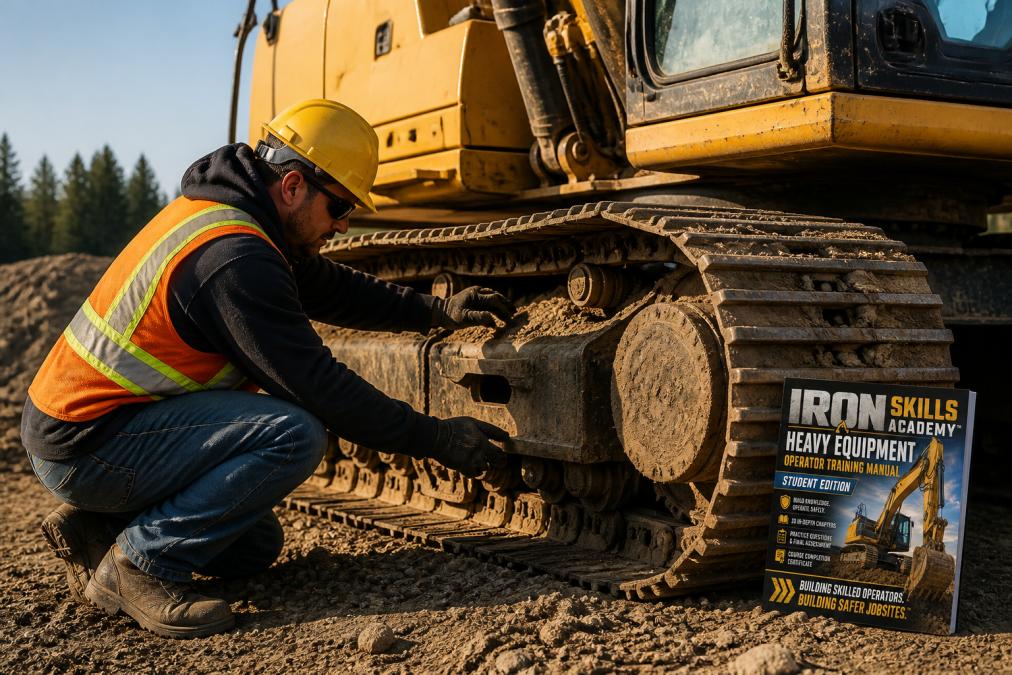
Visual Inspection of the Undercarriage and Tracks
Start with what you can see. The undercarriage and tracks bear the machine's weight and deliver power to the ground. Damaged tracks cause loss of stability and potential tip-overs.
Check for:
- Track tension: Grab the track midway between the sprocket and idler. It should move 1-2 inches vertically. Too loose and the track derails; too tight and you'll wear out components prematurely.
- Visible cracks or breaks: Look along the entire track length for broken links.
- Mud and debris: Packed mud hides damage and adds weight. Clean it out.
- Bolt tightness: Visually check that bolts connecting track components are seated.
- Sprocket and idler condition: Look for teeth damage or excessive wear that would cause slipping.
Take a photo on day one of what "good" looks like on your specific machine. Compare to that baseline daily.
Hydraulic System and Fluid Level Checks
The hydraulic system is the excavator's circulatory system. Without proper hydraulic pressure, nothing moves. Low fluid, contaminated fluid, or leaks turn your excavator into a very expensive paperweight.
Check the hydraulic fluid level with the engine off and the machine on level ground. The sight glass on the side of the hydraulic reservoir shows the level; it should be in the middle of the green zone. Look for hydraulic leaks under the machine, at hose connections, and on cylinders. Small leaks get bigger. If fluid looks dark or smells burnt, it's overheated or contaminated and should be tested or replaced before operating.
Controls, Counterweight, and Structural Integrity
The counterweight on the back of the excavator balances the load on the boom. A loose or damaged counterweight shifts the machine's center of gravity and causes tip-overs. Check that bolts securing the counterweight are tight and there are no visible cracks in the casting.
Inspect the joystick controls for responsiveness and damage. Move them through their full range before starting the engine. Controls should move smoothly without grinding or sticking. Check the cab structure, windows, mirrors, seat belt, and emergency stop button for functionality.
Essential Safety Protocols and Hazard Awareness on Site
Safety protocols exist because specific accidents happened repeatedly until someone documented the fix. Understanding why a protocol exists makes you more likely to follow it consistently.
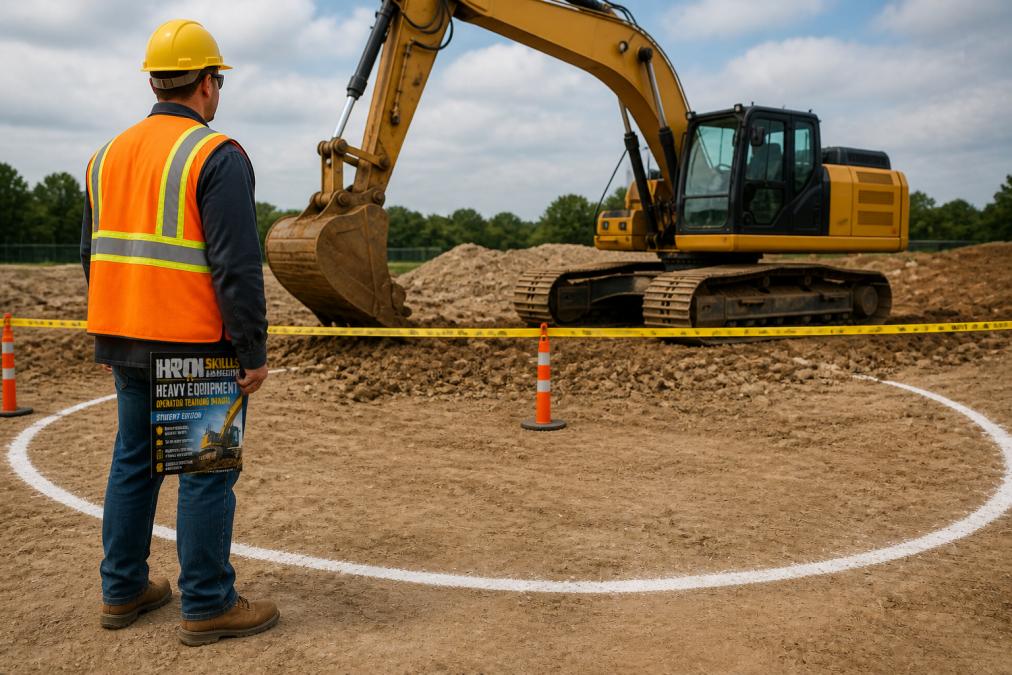
Understanding Blind Spots and Swing Radius
An excavator has four major blind spots: directly behind the cab, directly in front of the bucket, and both sides at the rear of the machine. The swing radius is the circular area the boom and bucket traverse when you rotate the superstructure. The bucket can reach 30-40 feet from the machine's center depending on the model.
Establish a hazard zone marked with tape or cones. No personnel enter that zone while the excavator is operating. Before you rotate the boom, look in all directions. Use mirrors and camera systems if your machine has them. Sound the backup alarm. Move slowly during rotation so nearby workers can move away if needed.
Utility Strike Prevention and Ground Disturbance
Striking underground utilities, electrical lines, gas lines, or water mains kills operators and bystanders instantly. Before you break ground, call 811 (in North America) or your local utility locating service. They mark buried utilities with paint or flags. Respect the marks and dig carefully near them using hand tools or soft digging.
Ground disturbance means any excavation that penetrates soil. Before excavating, understand the soil classification. If you're doing trenching work, soil classification determines the required shoring or sloping.
Bystander Safety and Personal Protective Equipment
Your responsibility is to operate in a way that doesn't put others at risk, regardless of their PPE. Establish communication with spotters and nearby workers before starting. Use hand signals or radio communication. Spotters should wear high-visibility vests and stay outside the swing radius. Require all personnel in the excavation zone to wear hard hats, safety vests, and steel-toed boots.
How Long Is Heavy Equipment Operator Training?
Entry-level excavator operation training typically takes 40-80 hours spread over 1-3 weeks. Comprehensive excavator operator certification, including trenching and advanced techniques, takes 80-120 hours over 2-4 weeks. Specialized training, such as precision grading with GPS systems or operating in confined spaces, adds another 40-60 hours. Iron Skills Academy's training materials compress essential knowledge into focused modules so you're not sitting through irrelevant material. Most students complete foundational training in 2-3 weeks of full-time study.
Excavator Operator Certification Requirements and Standards
Certification proves you've met a standard. Different certifications carry different weight in the industry.
OSHA Standards and Compliance
OSHA doesn't mandate a single excavator certification, but it requires employers to ensure operators are competent. Competence is defined as the ability to recognize hazards and take corrective action. OSHA requires that operators understand hazard recognition, safe operation procedures, and emergency response. Before you enroll in training, check your state's requirements and your target employer's hiring standards.
Hands-On Practical Evaluation and Skills Testing
The best certification includes a practical evaluation where an examiner watches you operate the machine and assesses your technique. A solid practical evaluation includes pre-operation inspection, basic maneuvering, bucket operation, hazard recognition, and emergency response. The evaluation typically takes 30-60 minutes. Examiners are looking for consistent safe practices, not perfect technique.
Mastering Basic Excavator Controls and Bucket Operation
Most excavators use joystick controls on the right armrest. The right joystick controls boom (forward/back) and bucket (curl/dump). The left joystick controls swing (left/right) and travel (forward/backward).
Joystick Controls and Machine Orientation
Before you touch the controls, sit in the cab and orient yourself to the machine. The cab rotates independently from the tracks. Move the joysticks slowly at first. Excavators respond to small inputs. Practice the following sequence: move the boom up and down slowly, curl and dump the bucket smoothly, swing left and right while keeping the boom steady, move forward and backward in a straight line, and combine movements. This takes 2-3 hours of practice to develop muscle memory.
Load Capacity, Stability, and Safe Maneuvering
Every excavator has a maximum load capacity, the heaviest bucket load it can safely lift without tipping. This capacity changes based on boom extension and bucket position. Know the load capacity numbers for your machine at various boom angles. Safe maneuvering means moving smoothly and predictably. Jerky movements cause loss of control. On slopes, gravity affects stability. Operating on a 15-degree slope is fundamentally different than operating on level ground. Experienced operators adjust their technique: shorter reaches, lighter loads, slower movements.
Trenching and Excavation Techniques for Safe Operations
Trenching is excavation's highest-risk operation. According to NIOSH research on trenching fatalities, 50% of trenching fatalities involve operators who were buried when trench walls collapsed. Before you dig a trench, understand soil classification. Soil Type A is stable clay or silt. Soil Type B is granular soil or clay with some cohesion. Soil Type C is granular soil with no cohesion or saturated soil. Each type requires different protection. For Soil Type A, trenches up to 5 feet deep require sloping at 45 degrees or shoring systems. For Soil Type B, steeper angles or more substantial shoring. For Soil Type C, benching or full shoring systems are required.
You can't visually determine soil type from the surface. You have to dig a test hole, examine the soil, and classify it. Dig slowly and watch the soil as you excavate. If soil is crumbling or sliding into the trench, you need steeper slopes or shoring. If you're hitting water, the trench needs dewatering before workers enter. Trenches wider than 5 feet and deeper than 5 feet require continuous inspection by a competent person.
Emergency Shutdown and Recovery Procedures
Every operator needs to know what to do when something goes wrong. If the engine stalls while the boom is raised, the boom will lower slowly as hydraulic pressure bleeds off. This is by design. Stay calm and restart the engine. If the engine won't restart, use the emergency descent valve to lower the boom fully.
If you lose hydraulic pressure during operation, the machine won't respond to controls. Move bystanders away from the swing radius and call for help. If the machine tips, stay in the cab, it's the strongest part of the machine. The emergency stop button kills the engine immediately. Use it if you lose control or if someone is in immediate danger. Practice these procedures in training so you'll respond automatically when something actually goes wrong.
Excavator safety training for beginners isn't about memorizing rules, it's about building the mental models that keep you and everyone around you safe. The operators who go home uninjured are the ones who understand why each protocol exists, not just that it exists.
Iron Skills Academy's Heavy Equipment Operator Training Manual provides the structured foundation that accelerates your learning. Our materials combine classroom knowledge with practical checklists so you're not relying on memory when you're on a job site. Start with the Iron Skills Academy™ Heavy Equipment Operator Training Manual, Student Edition to build your knowledge before climbing into the cab, or upgrade to the Iron Skills Academy™ Heavy Equipment Operator Training Manual, Premium Bundle for comprehensive resources across all heavy equipment types. The investment in proper training pays dividends in safety, confidence, and career advancement.
=== FAQ ANSWERS (audit these too, same rules) ===
[1] Q: How long does excavator safety training take for beginners? A: Most excavator operator training programs range from 2 to 3 weeks of full-time instruction. National Training, Inc. offers an 80-hour course completed in two weeks, combining classroom, simulator, and hands-on training. Performance Training Solutions provides a three-week program. The total duration depends on whether you pursue basic competency or formal NCCER certification, which may extend the timeline. Blended learning approaches allow some flexibility for working professionals.
[2] Q: What are the main excavator operator certification requirements? A: Excavator operator certification requirements vary by jurisdiction and employer. Most programs require OSHA-compliant training covering safety protocols, pre-operation inspections, and hazard awareness. Many certifications include a written exam and hands-on skills evaluation. Some employers require NCCER Registry credentials or state-specific licensing. At minimum, operators must demonstrate competency in machine controls, trenching safety, and site hazard recognition. Iron Skills Academy's training manual covers these foundational requirements to prepare you for formal certification pathways.
[3] Q: What should be included in an excavator pre-operation inspection checklist? A: A comprehensive excavator pre-operation inspection checklist includes visual inspection of tracks and undercarriage for damage, checking hydraulic fluid levels, testing all controls and levers, verifying the counterweight is secure, inspecting bucket teeth and attachment points, checking emergency stop functionality, and confirming all warning lights and indicators work. Track tension should be examined for proper alignment. Fluid levels in the hydraulic system must meet manufacturer specifications. This daily pre-shift inspection takes 10-15 minutes and prevents equipment failure and operator injury during work.
[4] Q: Do I need formal certification to operate an excavator, or is on-the-job training sufficient? A: While on-the-job training has been traditional, formal excavator safety training is increasingly required by employers and regulations. OSHA standards mandate that operators demonstrate competency in safety protocols and equipment operation. Many construction companies now require certification before allowing operators on site. Between 2015 and 2020, OSHA reported 98 excavator incidents with 45% fatality rates, mostly from struck-by accidents preventable through proper training. Formal training reduces these risks significantly and improves job prospects. Iron Skills Academy's structured curriculum ensures you meet industry standards and employer expectations.
Frequently Asked Questions
How long does excavator safety training take for beginners?
Most excavator operator training programs range from 2 to 3 weeks of full-time instruction. National Training, Inc. offers an 80-hour course completed in two weeks, combining classroom, simulator, and hands-on training. Performance Training Solutions provides a three-week program. The total duration depends on whether you pursue basic competency or formal NCCER certification, which may extend the timeline. Blended learning approaches allow some flexibility for working professionals.
What are the main excavator operator certification requirements?
Excavator operator certification requirements vary by jurisdiction and employer. Most programs require OSHA-compliant training covering safety protocols, pre-operation inspections, and hazard awareness. Many certifications include a written exam and hands-on skills evaluation. Some employers require NCCER Registry credentials or state-specific licensing. At minimum, operators must demonstrate competency in machine controls, trenching safety, and site hazard recognition. Iron Skills Academy's training manual covers these foundational requirements to prepare you for formal certification pathways.
What should be included in an excavator pre-operation inspection checklist?
A comprehensive excavator pre-operation inspection checklist includes visual inspection of tracks and undercarriage for damage, checking hydraulic fluid levels, testing all controls and levers, verifying the counterweight is secure, inspecting bucket teeth and attachment points, checking emergency stop functionality, and confirming all warning lights and indicators work. Track tension should be examined for proper alignment. Fluid levels in the hydraulic system must meet manufacturer specifications. This daily pre-shift inspection takes 10-15 minutes and prevents equipment failure and operator injury during work.
Do I need formal certification to operate an excavator, or is on-the-job training sufficient?
While on-the-job training has been traditional, formal excavator safety training is increasingly required by employers and regulations. OSHA standards mandate that operators demonstrate competency in safety protocols and equipment operation. Many construction companies now require certification before allowing operators on site. Between 2015 and 2020, OSHA reported 98 excavator incidents with 45% fatality rates, mostly from struck-by accidents preventable through proper training. Formal training reduces these risks significantly and improves job prospects. Iron Skills Academy's structured curriculum ensures you meet industry standards and employer expectations.
This article was written using GrandRanker