

Table of Contents
- Why Formal Excavator Operator Certification Matters More Than Ever
- Safety, Liability, and What Certification Actually Protects
- Earning Potential and Career Advancement for Certified Operators
- Heavy Equipment Operator Certification Requirements Explained
- Heavy Equipment Training Course Duration: What to Expect
- Equipment Longevity, Reduced Operating Costs, and ROI for Operators
- How to Verify Operator Proficiency Standards on Your Worksite
- Formal Excavator Operator Certification: Taking the Next Step
Last Updated: August 19, 2026
Why Formal Excavator Operator Certification Matters More Than Ever
Formal excavator operator certification goes well beyond a credential on a wall. According to the Bureau of Labor Statistics Occupational Outlook Handbook, overall employment of construction equipment operators is projected to grow 4 percent from 2024 to 2034, and the construction industry needs 349,000 net new workers in 2026 alone. With 57% of firms reporting that available candidates lack essential skills or appropriate licences, formal credentials are no longer optional, they are the filter employers use first.
The real argument for formal excavator operator certification is operational. Certified operators complete tasks faster, damage equipment less, and create fewer liability exposures for their employers. Below, we cover the safety, financial, and regulatory case for certification, including the ROI calculation most operators never run.
Excavator operator certification is the process by which an operator completes a structured training program covering equipment theory, safety protocols, pre-shift inspection procedures, and practical operation skills, resulting in a recognised credential that verifies their competency to operate excavating machinery.
Safety, Liability, and What Certification Actually Protects
Formal certification directly reduces the risk of serious injury and death on construction sites. According to Safe Work Australia's work-related injury fatalities report, 24% of workplace fatalities in 2023 in Australia occurred in construction, often linked to improper equipment use or inadequate training.
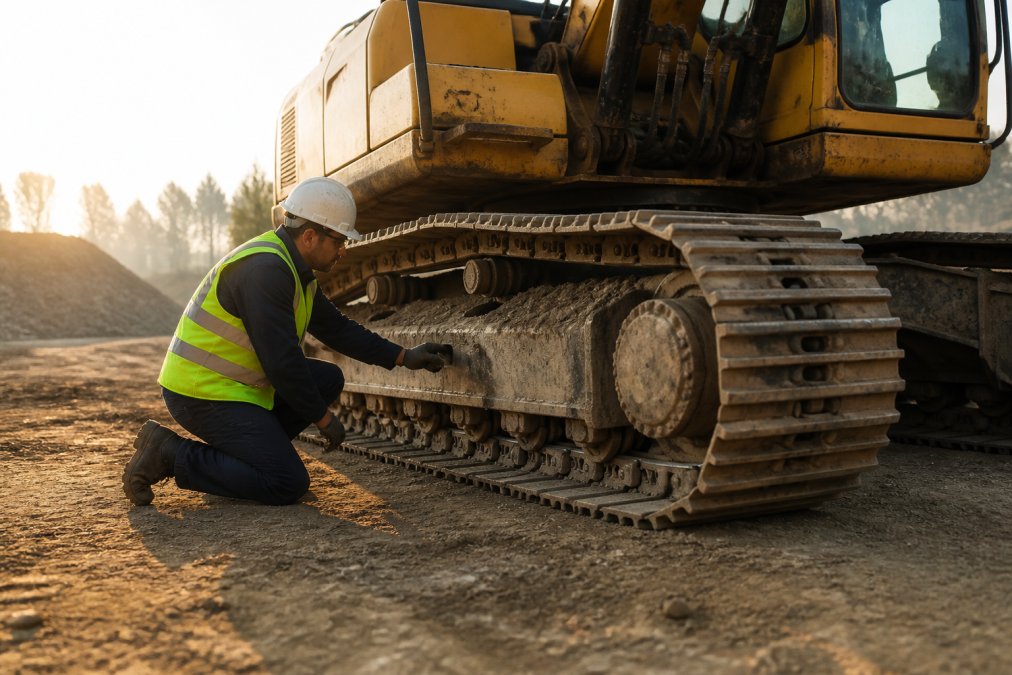
Hazard Identification and Pre-Shift Inspection Skills
The most underrated skill a formal training program builds is the pre-shift inspection. Most accidents occur because a hydraulic line failure, worn undercarriage component, or blind-spot hazard went undetected before the machine moved.
A structured excavator certification program teaches operators to systematically check fluid levels, hydraulic connections, track tension, swing bearing condition, and alarm codes before each shift. This knowledge is not reliably passed through informal mentoring. Formal curriculum eliminates variability by anchoring inspection to a documented standard.
Hazard identification training also covers site-specific risks: underground utilities, overhead power lines, unstable ground conditions, and proximity to other workers.
Insurance and Employer Liability Implications
Formal training has direct insurance and legal consequences. When an unqualified operator causes an incident, the employer's exposure is significantly higher. Insurers assess operator credentials when processing claims, and a lack of documented training is treated as a material risk factor. In 2024, OSHA reported millions of dollars in penalties related to trenching hazards.
Employers who maintain documented certification records demonstrate due diligence. This matters in litigation, insurance renewals, and contract tendering where clients routinely audit workforce compliance.
Earning Potential and Career Advancement for Certified Operators
The median annual wage for construction equipment operators reached $58,320 in May 2024, according to Bureau of Labor Statistics wage data, with the top 10 percent earning $48.60 per hour or more. Certified operators in Australia earn an average of $70,000 to $90,000 annually, according to SEEK (2024). Certification is the documented prerequisite that gets operators considered for roles that pay these wages.

Certification opens vertical career paths that informal experience alone cannot. Operators with recognised credentials move into roles as site supervisors, equipment trainers, safety officers, and project managers. These positions require documented proof of competency.
| Career Stage | Typical Role | Certification Advantage |
|---|---|---|
| Entry level | Operator's assistant / labourer | Certification accelerates progression to operator seat |
| Mid-career | Equipment operator | Higher base pay, access to prevailing wage projects |
| Senior level | Lead operator / site supervisor | Formal credential required for supervisory roles |
| Advanced | Trainer / safety officer | Certification is a prerequisite, not a differentiator |
Heavy Equipment Operator Certification Requirements Explained
Heavy equipment operator certification requirements vary by country, state, and type of work. In the United States, the primary industry-recognised credential framework comes through the National Center for Construction Education and Research. In Australia, a Certificate III in Civil Construction Plant Operations is the standard pathway. In the UK, the Construction Plant Competence Scheme provides the equivalent benchmark.
Common requirements across most formal programs include:
- Minimum age threshold (typically 18 years)
- Completion of a structured classroom or online theory component
- Documented hands-on operating hours
- Written and practical assessment
- First aid certification in some jurisdictions
Selecting a program registered with a recognised credentialing body ensures the qualification is portable across employers and geographically transferable.
Certification vs. Licensing vs. OSHA Compliance: What Is the Difference
These three terms describe different things, and confusing them creates real compliance gaps.
Certification is a voluntary or employer-mandated credential that verifies an operator has met a defined competency standard. It is issued by a training organisation or industry body and is typically renewed on a cycle.
Licensing is a government-issued authorisation required to legally operate specific equipment in certain jurisdictions. In Australia, a High Risk Work Licence is legally required to operate certain plant. This is not optional and is not the same as completing a training course.
OSHA compliance refers to adherence to Occupational Safety and Health Administration standards, which mandate that employers ensure operators are competent but do not always specify a named certification. OSHA compliance is a floor, not a ceiling.
Operators and employers need to satisfy all three layers independently. A certified operator who does not hold the required licence is still non-compliant.
Heavy Equipment Training Course Duration: What to Expect
Heavy equipment training course duration depends on the program type, equipment covered, and prior experience. Most structured excavator certification programs run between three and five days for the core curriculum, with additional time required for practical assessment.
A five-day program typically covers theoretical equipment knowledge on days one and two, safety systems and pre-shift inspection on day three, and supervised practical operation on days four and five, with final assessment at the end. Participants who pass receive their certification on completion.
For experienced operators, compressed programs of two to three days focus on knowledge gaps and formal assessment. Online theory components can reduce on-site time requirements, which matters for operators who cannot afford extended downtime.
The equipment operator training simulator market is projected to grow from $2.1 billion in 2025 to $4.2 billion by 2034 at a compound annual growth rate of 8.7%, driven by the ability to deliver realistic training without removing machines from production.
Equipment Longevity, Reduced Operating Costs, and ROI for Operators
Certified operators understand excavator work modes, fuel-saving features, and optimal RPM ranges for different tasks. A construction company that trains operators on these fundamentals can achieve approximately a 10% reduction in fuel consumption by running at 200 to 300 RPMs lower than untrained defaults. An excavator with 7,500 hours on the clock at resale commands a materially higher price than one with 10,000 hours from the same period.
Pre-shift inspection training catches hydraulic leaks, worn undercarriage components, and track tension issues before they become expensive failures. Unplanned downtime on a construction project cascades across every trade that follows the excavation phase.
| Factor | Without Certification | With Certification |
|---|---|---|
| Starting wage | Below median | At or above median |
| Access to prevailing wage projects | Limited | Full access |
| Employer liability risk | High | Documented and managed |
| Equipment damage incidents | Higher frequency | Reduced through inspection protocol |
| Career progression timeline | Slow, informal | Structured, credential-gated |
The investment in a formal certification program typically pays back within the first year through wage differential alone.
How to Verify Operator Proficiency Standards on Your Worksite
Verifying operator proficiency is not the same as checking whether someone holds a certificate. Certificates confirm that an operator met a standard at a point in time. Proficiency verification confirms they are still meeting it.
A structured verification process should include:
- Document review - Confirm the operator holds a current, valid certification from a recognised program.
- Pre-shift inspection observation - Watch the operator complete a pre-shift inspection without prompting.
- Operational assessment - Observe the operator during routine tasks. Assess swing control, bucket placement precision, and response to site hazards.
- Recertification schedule - Maintain a register of certification expiry dates.
- Incident and near-miss review - Use incident data as a proficiency signal.
Equipment technology evolves. New 2026 excavators increasingly incorporate AI assist systems, 2D/3D grade control, and 360-degree camera systems. An operator certified five years ago on conventional hydraulic controls needs updated training to operate these systems safely and efficiently.
Formal Excavator Operator Certification: Taking the Next Step
Formal excavator operator certification is the documented proof that an operator can do the job safely, efficiently, and in compliance with regulatory standards. The benefits span safety outcomes, earning potential, equipment longevity, employer liability management, and career advancement.
The construction industry's skilled labour shortage is real. According to Associated Builders and Contractors workforce shortage analysis, the industry needs to attract hundreds of thousands of net new workers annually. Formal certification is the mechanism that converts motivated individuals into qualified professionals.
Iron Skills Academy provides training resources covering excavators, dozers, wheel loaders, skid steers, backhoe loaders, and motor graders, designed for both new operators building foundational knowledge and instructors who need comprehensive curriculum packages. The Iron Skills Academy Heavy Equipment Operator Training Manual gives operators the technical grounding to walk onto a site prepared.

The operators who invest in formal credentials now are the ones who will be first considered for the infrastructure projects, mining contracts, and construction programmes that define the next decade of industry growth.
Start Training with Iron Skills Academy and build the technical foundation that separates qualified operators from everyone else.
Certification without preparation is a box-ticking exercise. The operators who get the most from formal excavator operator certification are the ones who arrive with a solid understanding of equipment systems, inspection protocols, and operational fundamentals before they sit the assessment. Iron Skills Academy's training materials cover the full technical curriculum across all major machine types, giving operators and their employers the knowledge base that makes certification meaningful rather than minimal. Start Training today and give your operators the preparation that turns a credential into genuine competency.
Frequently Asked Questions
What certifications do I need to operate an excavator?
Requirements vary by employer and jurisdiction, but most construction sites expect operators to hold an industry-recognized credential from a program aligned with OSHA excavation standards. In the US, NCCER certification is widely accepted. Some employers also require a valid equipment operator licence under state or local regulations. At a minimum, operators must demonstrate competency in hazard identification, pre-shift inspection, and safe dig procedures before working unsupervised on site.
How long does it take to become excavator certified?
Structured programs range from five days for intensive site-based courses to several weeks for broader heavy equipment operator certification programs. Online theory components can be completed at your own pace before practical assessments. The total time depends on whether you are starting with zero experience or building on existing skills. Iron Skills Academy's training materials let you cover the technical foundations before you ever sit in the cab, shortening overall course time.
Does formal certification reduce insurance costs for construction companies?
Yes, in most cases. Insurers assess workforce risk when pricing liability and workers' compensation premiums. Companies that document formal excavator operator certification and structured workforce training programs present a lower risk profile. OSHA reported millions of dollars in penalties related to trenching hazards in 2024 alone, and a single non-compliance incident can trigger premium increases far exceeding the cost of training. Certification records also provide a defensible paper trail if an incident leads to litigation.
Is being a heavy equipment operator worth it financially?
The numbers support it. The median annual wage for construction equipment operators reached $58,320 in May 2024, with the top 10 percent earning the equivalent of $48.60 per hour or more. Certified operators in Australia average $70,000-$90,000 annually. Employment is projected to grow 4 percent from 2024 to 2034, and the construction industry needs to attract 349,000 net new workers in 2026. Formal certification gives candidates a clear advantage when competing for those roles.
This article was written using GrandRanker